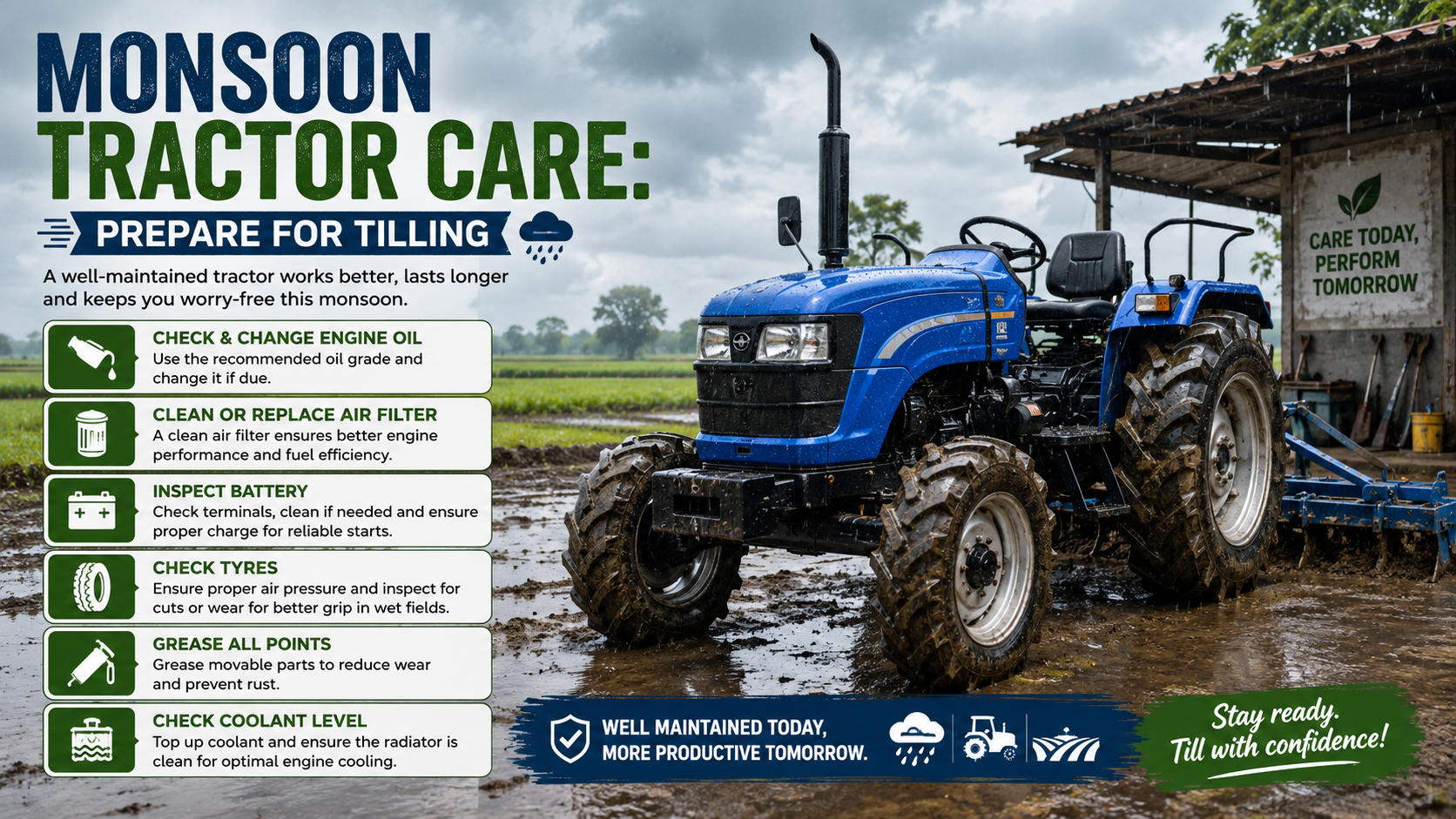
Monsoon Tractor Care: Prepare for Tilling
The monsoon season is the most important time of year for Indian farmers specially punjab, haryana, jhrakhand bihar, and it’s also the most demanding period for your tractor for cultivation. As soon as the rains arrive, fields need to be prepared quickly for sowing, which means your tractor and rotavator have to work long hours in wet, muddy, and often harsh conditions. If your machine isn’t properly serviced before this season begins, you risk breakdowns at the worst possible time — right when tilling and sowing windows are tightest.
Before you take your tractor into the field this monsoon, here are the key areas you cannot afford to ignore: wheel bearing and oil seal protection, a full engine service, a complete rotavator inspection, and proper tyre air pressure — along with a few practical field tips that experienced operators swear by.
1. Bearing Protection: Inspect Wheel Bearings and Oil Seals
Monsoon conditions mean your tractor will be running through mud, slush, and standing water for hours at a stretch. This is exactly the kind of environment that destroys wheel bearings and oil seals if they aren’t in good condition.
Why this matters: Wheel bearings allow your tractor’s wheels to rotate smoothly under heavy load. Oil seals exist to keep lubricant inside the hub and, just as importantly, to keep water, mud, and dirt out. When a seal is worn, cracked, or damaged, water can seep into the bearing housing during monsoon work. Once water mixes with the grease inside, it loses its lubricating properties, and the bearing starts grinding metal against metal. This leads to overheating, pitting, and eventually complete bearing failure — often in the middle of a field, far from any repair shop.
What to check before the season starts:
- Inspect both front and rear wheel hubs for any signs of grease leakage, which usually indicates a failing oil seal.
- Spin each wheel by hand (with the tractor properly jacked up and supported) and feel for roughness, grinding, or excessive play. A healthy bearing should rotate smoothly and quietly.
- Look closely at the oil seal lips for cracks, hardening, or tears. Rubber seals degrade with age and heat, and a seal that looks fine from a distance may have lost its sealing edge.
- Repack bearings with fresh, water-resistant grease before the season begins, even if they appear to be in acceptable condition.
- Replace any oil seal that shows visible wear rather than waiting for it to fail completely. A seal costs a fraction of what a damaged bearing and hub repair will cost you, not to mention the lost working days.
Doing this inspection now, before the soil turns muddy, can save you from a costly mid-season breakdown when you can least afford the downtime.
2. Full Engine Service, Including Pump and Self (Starter)
Your engine is the heart of the tractor, and monsoon fieldwork puts extra strain on it. Pulling a loaded rotavator through wet, heavy soil for hours at a time demands more power and generates more heat than dry-season ploughing. This is the right time for a complete engine service rather than a quick once-over.
Key service points to cover:
- Engine oil and filter: Change the engine oil and oil filter if you haven’t done so recently. Dirty or old oil loses its ability to protect internal components under the higher loads that monsoon tilling demands.
- Fuel system and filters: Check and, if needed, replace the fuel filter. Monsoon humidity can also introduce water contamination into fuel tanks, so it’s worth draining any water from the fuel-water separator and ensuring the tank cap seals properly to keep moisture out.
- Water pump: The water pump keeps your engine’s cooling system circulating coolant effectively. Heavy-load monsoon work generates more heat, so a weak or leaking water pump can quickly lead to overheating. Check for coolant leaks around the pump housing, inspect the fan belt tension, and listen for any unusual bearing noise from the pump itself.
- Self (starter motor): Wet conditions are tough on electrical components. Check the starter motor connections for corrosion, ensure the battery terminals are clean and tight, and test that the self-start engages smoothly without hesitation or grinding. A weak starter that struggles in dry weather will often fail completely once humidity and moisture increase.
- Air filter: Wet, dusty field conditions combined with monsoon humidity can clog air filters faster than usual. Clean or replace the air filter so the engine continues breathing properly.
- Radiator and cooling fins: Clear away any dust, mud, or debris from the radiator fins so airflow isn’t restricted, which helps prevent overheating during long tilling sessions.
A thorough engine service now means fewer surprises once you’re deep into the sowing season, when every working hour in the field counts.
3. Full Rotavator Inspection: Bearings, Oil Level, Gaskets, Leakage, and Gears
The rotavator is your primary tilling tool, and it takes a tremendous amount of mechanical stress during monsoon preparation. Since it works directly in wet soil, it’s also highly exposed to water ingress and contamination, making a full inspection essential before the season begins.
Areas to inspect thoroughly:
- Bearings: Just like the tractor’s wheel bearings, the rotavator’s flange bearings and side bearings need to be checked for smooth rotation, noise, and play. These bearings work under constant rotational stress while chopping through soil, so any weakness will be magnified once the season’s workload begins.
- Oil level in the gearbox: Check the gearbox oil level and top it up if it’s low. Low oil levels lead to inadequate lubrication of the internal gears, causing excessive wear and heat buildup.
- Gaskets: Inspect all gasket surfaces on the gearbox and side covers. Gaskets harden and shrink over time, especially after exposure to heat and vibration, and a failing gasket is one of the most common causes of oil seepage.
- Oil leakage: Look closely around the chain case, gearbox housing, and bearing seals for any signs of oil leakage. Even a small leak can drain the gearbox of lubricant over a long tilling session, leading to gear damage.
- Gears: Open the chain case (if accessible) and inspect the gears and chains for wear, stretching, or broken teeth. Worn gears not only reduce tilling efficiency but can fail suddenly under load.
- Blades: It’s also worth checking the rotavator blades for wear or bending, since dull or damaged blades make the engine and gearbox work harder than necessary.
A complete inspection covering all of these points ensures your rotavator can handle continuous monsoon tilling without unexpected stoppages.
4. Tyre Air Pressure Checking
Tyres are easy to overlook, but they play a critical role in monsoon fieldwork. Wet, soft, and uneven soil demands the correct tyre pressure for proper traction, fuel efficiency, and operator safety.
- Check pressure in all tyres before heading into the field, since both over-inflated and under-inflated tyres reduce grip in muddy conditions.
- Under-inflated tyres sink deeper into soft soil, increasing the chances of getting stuck and putting extra strain on the engine and transmission to pull the tractor free.
- Over-inflated tyres reduce the tyre’s contact patch with the ground, lowering traction exactly when you need it most.
- Inspect tread condition as well, since worn-out treads lose their grip in wet, muddy fields far more than on dry, firm ground.
- Keep a tyre pressure gauge and a portable pump handy if you’re working across multiple fields, so you can adjust pressure on the go depending on soil conditions.
Correct tyre pressure isn’t just about performance — it directly affects how safely and efficiently your tractor handles monsoon terrain.
Pro Tips for Smooth Monsoon Tilling
Beyond mechanical checks, a few practical habits can save you significant time and trouble once you’re out in the field:
- Inspect the entire field before tilling. Walk the field and remove wires, rocks, ropes, and other hidden hazards. These can get tangled in the rotavator, damage blades, or even cause sudden jolts that strain bearings and gears.
- Always use casuel to avoid getting stuck mid-tilling. Move carefully through low-lying or waterlogged patches, and avoid pushing the tractor too hard through soft, saturated soil. Getting stuck mid-field not only wastes time but can also strain the transmission and PTO shaft while trying to pull free.
- Make sure the tractor driver is well trained. An inexperienced operator is far more likely to cause the tractor to get stuck, mishandle the clutch and throttle in heavy soil, or apply sudden loads that damage the rotavator. Poor handling is a common cause of problems like a broken PTO shaft on the rotavator, so proper training matters just as much as mechanical preparation.
Final Thoughts
Monsoon tilling doesn’t leave much room for error. Once the rains begin, every day matters for getting fields ready for sowing, and a tractor breakdown in the middle of this window can set you back significantly. Taking the time now to inspect wheel bearings and oil seals, complete a full engine service including the water pump and starter, thoroughly check your rotavator’s bearings, oil level, gaskets, and gears, and confirm correct tyre pressure will help ensure your equipment is ready for whatever the season throws at it.
Combine this mechanical preparation with smart field habits — clearing hazards beforehand, working cautiously in soft soil, and ensuring your driver is properly trained — and you’ll be well positioned for smooth, uninterrupted tilling once the fields are ready.