Tractor hydraulic problem and solution

tractor hydraulic problem's solution

Tractor hydraulic problem and solution

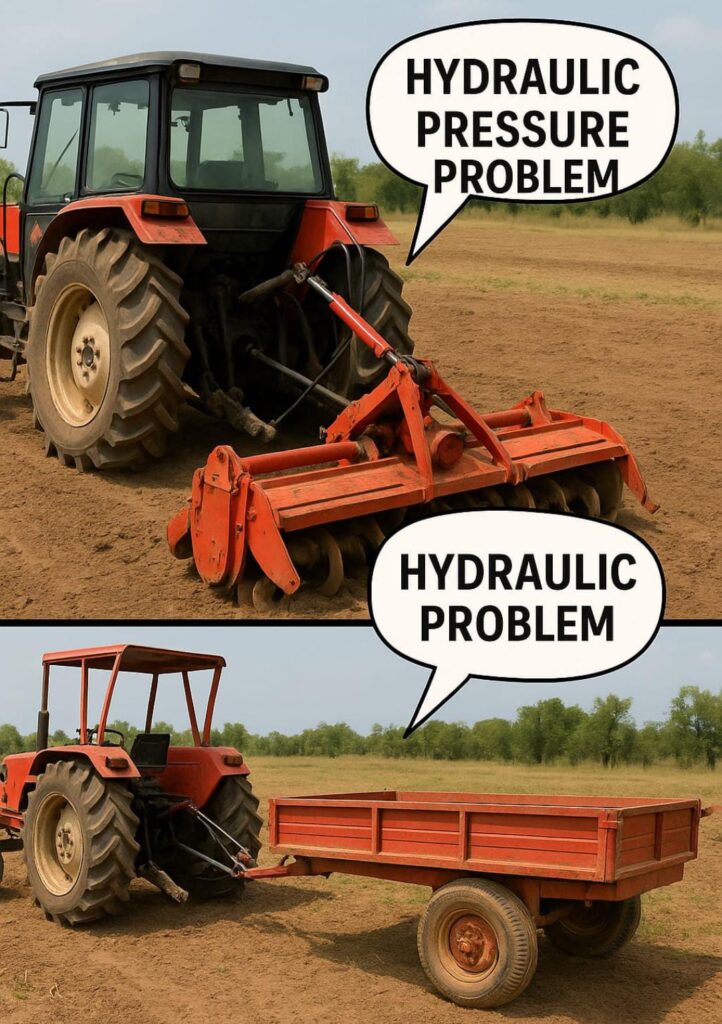
TRACTOR HYDRAULIC PROBLEM
There are many ways to deal with tractor hydraulic problems as the issue can range from oil leaks to faulty pumps, faulty filters, air leaks, overheating, and even sluggish running.
Slow or weak performance
If your tractor implements respond slowly to lift or perform, the system probably is not creating enough pressure.
Low fluid levels: The simplest reason for poor operation is low hydraulic fluid. Refer to the reservoir and top off with the fluid recommended by the manufacturer as necessary.
Clogged filters: A dirty or plugged hydraulic filter slows down fluid flow, causing the system to lag. Change the filter per your tractor’s service schedule.
worn hydraulic motor: The hydraulic pump is the system’s backbone. When it is worn, it will be unable to provide sufficient pressure and flow. It can be diagnosed by looking for low pressure, strange noises, and inefficiency.
Overheating
Heat may damage oil seals and run out the hydraulic fluid, causing premature component failure.
fluid level: Low fluid makes the system have to work harder and produce more heat.
Incorrect gear oil : Use of the wrong viscosity gear oil may compromise the system’s capacity for heat dissipation. Only use the fluid that the manufacturer recommends.
Excessive load: Driving under heavy load for a long time can tax the system too much and make it overheat.
Erratic or jerky movement
Irregular or stuttering hydraulic movement is frequently the result of air contaminated in the fluid.
Air leakage: Air may enter the system through loose fittings or leaks in suction side pump. Check all the hose and fittings for damage or loose clamps.
Fluid contamination
Dirty hydraulic fluid can do severe damage to your system by destroying seals, clogging filters, and wearing out components.
Water contamination: If your hydraulic fluid appears whiteness, it is water-contaminated, which can rust parts and deteriorate the fluid’s properties.
Dirt : Dirt particles can find their way into the system via external leaks, dirty couplers, or maintenance.
Leaks
Fluid leaks cause loss of pressure, decreased efficiency, and possible environmental risk.
Worn hoses and seals: Check all hoses and seals for cracks, damage, or wear and tear.
Loose fittings: Inspect all fittings and connections to make sure they are securely tightened.
Damaged couplers: Quick-connect couplers may leak because of damaged internal O-rings.
Before you start

My tractor is not racing what should I do

Tractor acceleration problem and solution

My tractor is not racing what should I do

  • Reason behind the tractor is  not racing, (power drop)
  • Fuel Supply. Sometimes various types of garbage get stuck in the tractor tank. The fuel supply is not reaching the pump properly. Either the pipe is blocked, the mesh is blocked, or the Diesel filter is stuck by the garbage. All these factors cause obstruction in the fuel line.
  • Fuel Pump. Sometimes the race setting in the fuel pump gets messed up. Because of this, the tractor has difficulty in acceleration. and also tractor speed and power
  • Clutch Assembly Problems. If the tractor’s acceleration is full or fast. Then the clutch and pressure plate can also be a reason. Because the clutch and pressure plate wear out over time. It is necessary to change these. If the clutch plate is old and worn out. Then it does not transfer full power from the engine to the gearbox. The tractor cannot run fast and with power. And this is why the engine also overheats.
  •  Adjustment of clutch pedal. Make sure the clutch pedal is fully released. A loose clutch or pedal clearance problem can cause a decrease in power transfer.
  • Tyre condition is also a reason of power drop.
  • Air Filter: A clogged air filter can also hamper engine performance.
  • SOLUTION.
  • Clean the tractor tank and fuel lines
  • change diesel filter
  • Get the pump settings adjusted by a mechanic.
  • Change the clogged air filter with new one.
  • And if all this doesn’t work out
  • Then go to a mechanic and get the clutch and pressure plate checked. If it is damaged, replace it with a new one.
  • Hope your tractor will be fine. and work as new one.

How to maintain Rotavator

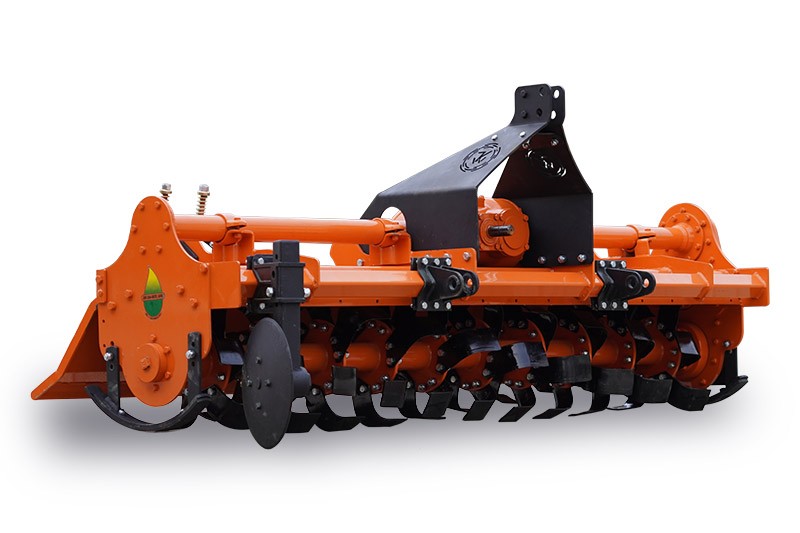
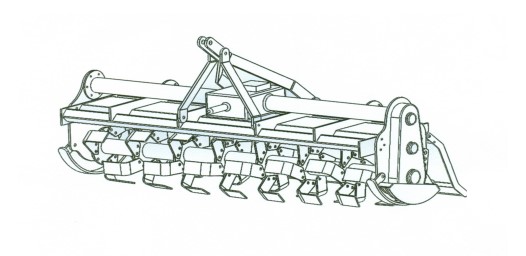
Rotavator diagram

How to maintain Rotavator

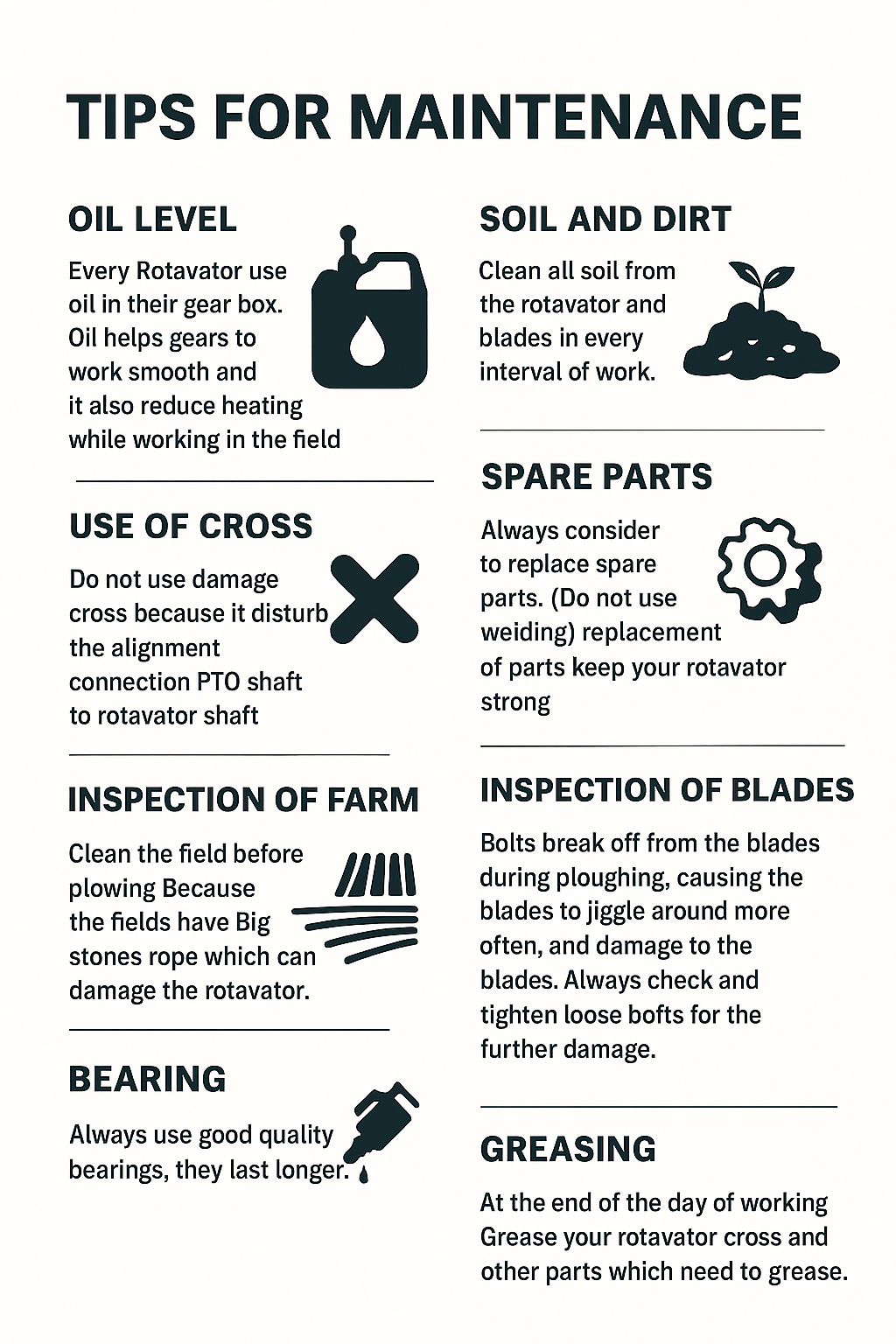
TIPS FOR MAINTENANCE

Oil level: – Every Rotavator use oil in their shaft gear box and Rotary gear box. Oil helps gears to work smooth and it also reduce heating while working in the field 

So when working in the field check oil level every after 2or3 days. To avoid extra expenses or waste of time during heavy work load.

Soil and dirt :- while working in the field heavy soil stick under the rotary  it reduce the rotavator speed and harm the body    So clean all soil from the rotavator and blades  in every interval of work.
Use Of Cross :- do not use damage cross because it disturb the alignment connection PTO shaft to rotavator shaft 
Spare Parts :- Always consider to replace spare parts not use welding replacement of parts keep your rotavator strong
Inspection of farm  :- Clean the field before plowing Because the fields have Big stones rope which can damage the rotavator. The rope clings to the blade and damages the oil seal
Inspection of blades:

Bolts break off from the blades during ploughing, causing the blades to jiggle around more often. and damage to the blades Always check and tighten loose bolts for the further damage.

Bearing :- Always use good quality bearings, they last longer.
Greasing:- At the end of the day of working. Grease your rotavator cross and other parts which need to grease. the habit of greasing protect parts from corrosion
TIPS FOR MAINTENANCE ROTAVATOR

Why We Use Coolant in Tractor

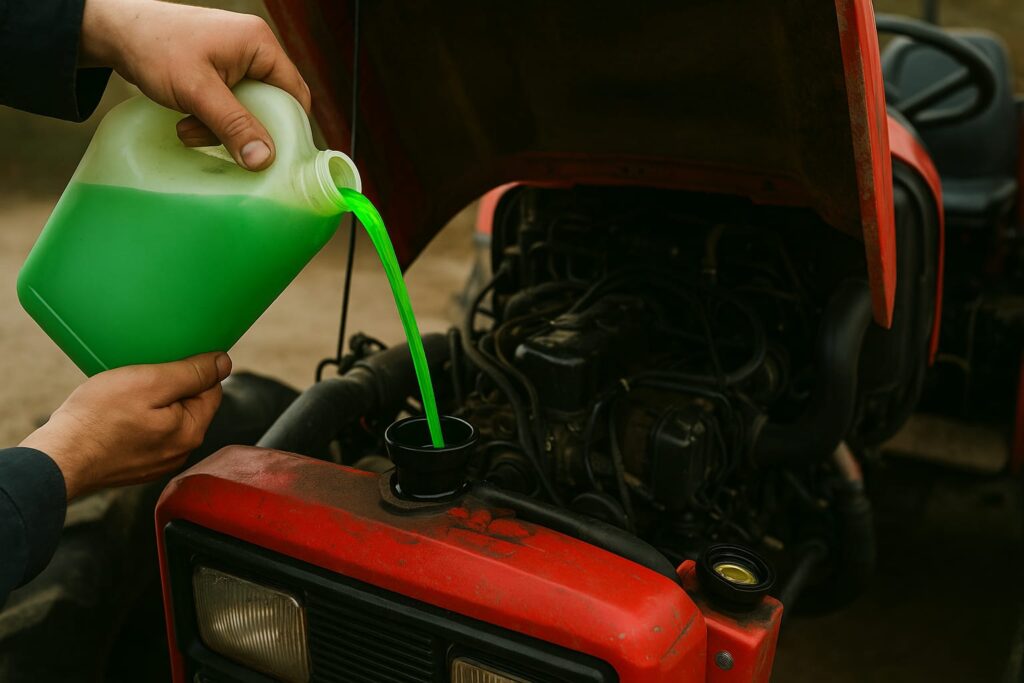
Filling coolant in tractor is necessary

Why We Use Coolant in Tractor

Coolant in a tractor is used to regulate the engine’s temperature

preventing overheating and ensuring optimal performance. It helps dissipate heat generated during engine operation, protects engine components from thermal damage, and maintains efficient functioning under heavy loads or high temperatures. Proper cooling also extends the engine’s lifespan and improves fuel efficiency.

Water vs. Coolant

FeatureWaterCoolant
PurposePrimarily for coolingFor cooling and engine protection
Freezing PointFreezes at 0°CContains antifreeze, prevents freezing
Boiling PointBoils at 100°CHigher boiling point, prevents overheating
Corrosion ProtectionNoContains additives to prevent rust and corrosion
LubricationNoYes, lubricates water pump and parts
Color/AdditivesUsually clear, no additivesOften colored, contains corrosion inhibitors


Water vs. Coolant: Understanding the Differences and Features of Coolant

When it comes to maintaining the optimal temperature of engines and machinery, choosing the right fluid is crucial. Two common options are water and coolant. While both serve the purpose of heat transfer, they have distinct properties and applications.

Water: The Basic Cooling Medium

Advantages

  • High Thermal Conductivity: Water is excellent at absorbing and transferring heat.

  • Availability and Cost: It is inexpensive and readily available.

  • Effective in Short-Term Use: Suitable for temporary cooling needs.

Disadvantages

  • Corrosion: Water can cause rust and corrosion in metal parts.

  • Freezing Point: It freezes at 0°C, which can damage engines in cold climates.

  • Boiling Point: Boils at 100°C under standard pressure, limiting its effectiveness at high temperatures.

  • Scale and Mineral Deposits: Can lead to mineral buildup, reducing efficiency.

Coolant: The Specialized Fluid

What is Coolant?

Coolant, often called antifreeze, is a specially formulated liquid designed to regulate engine temperature and prevent damage. It is typically a mixture of water and chemical additives.

Features of Coolant

  • Antifreeze Properties: Prevents freezing in cold weather.

  • Boiling Point Elevation: Raises the boiling point, allowing the engine to operate at higher temperatures without boiling over.

  • Corrosion Inhibition: Contains additives that protect metal parts from rust and corrosion.

  • Lubrication: Provides lubrication to water pump and other moving parts.

  • Color and Additives: Available in various colors (green, orange, pink) for identification and contain dyes and inhibitors.

Types of Coolant

  • Inorganic Acid Technology (IAT): Traditional coolants with silicates and phosphates.

  • Organic Acid Technology (OAT): Longer-lasting, with organic acids.

  • Hybrid Organic Acid Technology (HOAT): Combines features of IAT and OA

WHY DOES TRACTOR GET OVERHEATED

Tractor Overheated problem

Why Does Tractor get Overheated

Farmer brothers

  • If it is working time in the field and the tractor stops in the middle of the field with a hissing noise, then understand that the day’s work is lost. Now think, neither time is valued nor diesel is saved and on top of that the hard work in the field also comes to a halt. 
  • Tractor getting hot means overheating, this is not a trivial matter. , damage to the engine, damage to the pocket too.
  • Now the question arises that why does this overheating happen?
  • Actually there are some small but dangerous reasons behind this. Like dirt getting deposited in the radiator. Like sweating on the forehead in summer, 
  • lack of engine oil, the body also does not run without oil. How will the tractor run? 
  • Less coolant, the condition is like not getting cold water in summer. 
  • The fan belt is loose,  it will slip
  •  Or pulling the tractor with more load than required. Meaning your own weight is 50 kg and you are trying to lift a 200 kg sack.
  • And Thermostat dose not work properly while water pass out through thermostat it’s getting stuck  due to dirty water  and corraision
  • Now what is the Solution  for this?
  • The Solution is very easy . 
  • Clean the radiator. Check the engine oil and coolant. That too on time. Get the fan and belt tightened. This is what gives air to the engine. And yes, give as much load as you have. Tractor is not Superman. 
  • Now think if you do all this then what will be the benefit? 
  • First the engine  will run for a long time. Second, saving of diesel. Simply saving of money. Third, completing the work on time. Neither the labourers will run away nor the owner will get angry.

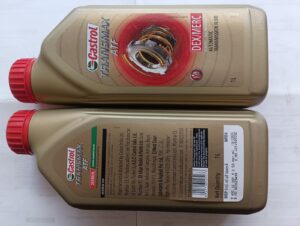
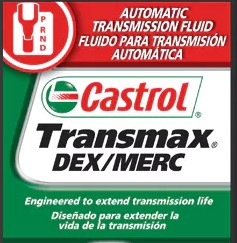
Steering oil castrol ATF

Transmax ATF Dex/Merc

MRP.  495.00

Automatic Transmission Fluid

Description
Castrol Transmax ATF Dex/Merc is designed for use in GM automatic transmissions pre 2005 and in Ford
automatic transmission built between 1983 and 1996 where Dexron® (II or III) or Mercon performance
is required. It provides enhanced protection to all moving parts of the transmission with its superior
friction durability and antiwear chemistry. It is also suitable for use older automatic transmissions in
various vehicles and as Power Steering Fluid.
Advantages
Enhanced friction durability prolongs transmission life and promotes smooth shifting.

Translate »