Lubricant Price Hike in India 2026

Lubricant Price Hike in India 2026

Automobile Lubricant Prices Surge 15–20% in India Amid Middle East Crisis

Lubricant Price Hike in India 2026

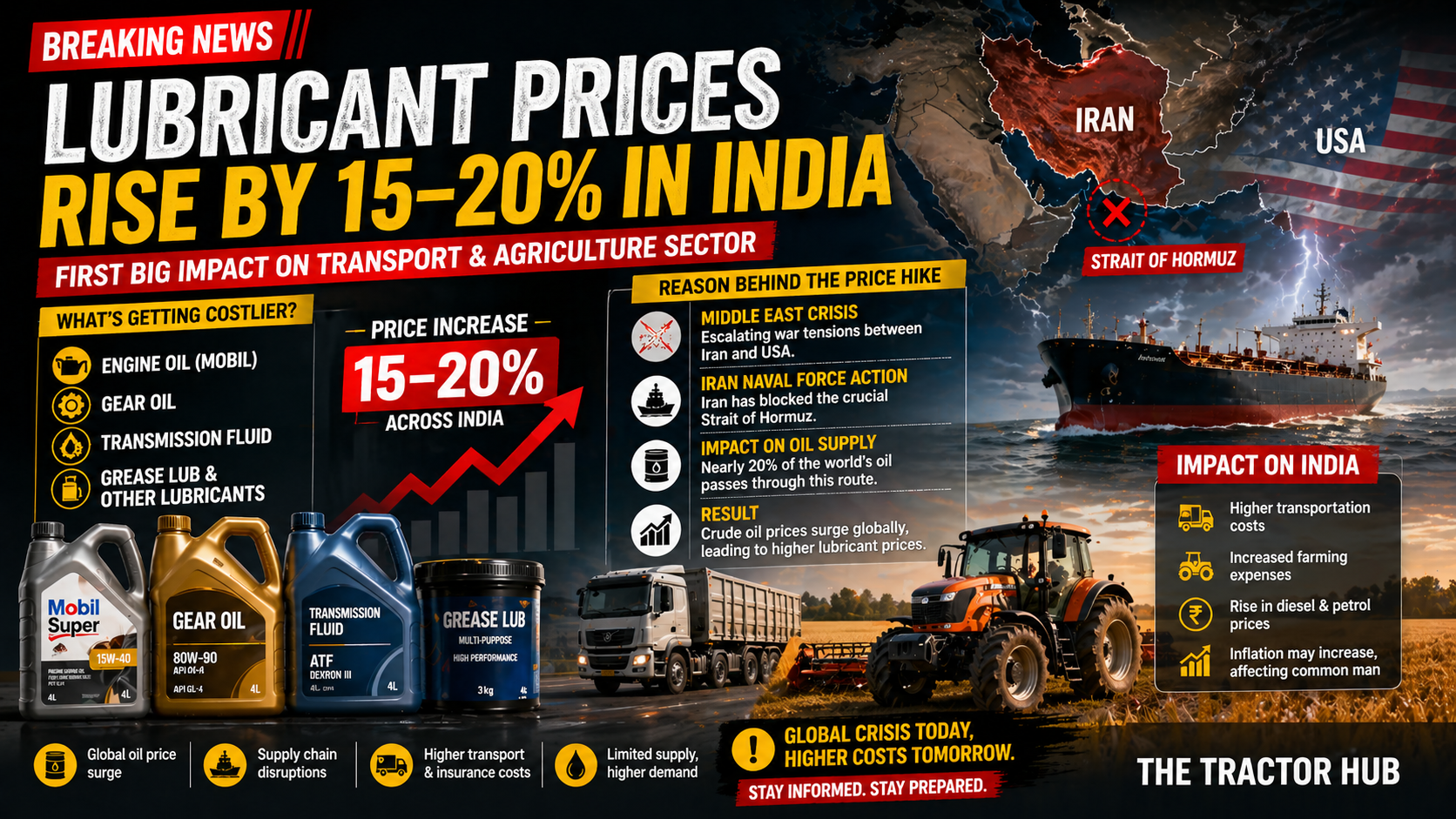
India is witnessing a sharp 15–20% increase in the prices of automobile lubricants, including engine oil (Mobil), gear oil, transmission fluid, and grease lubricants. This sudden price hike is becoming a major concern for both the transport sector and agricultural vehicle owners, as it directly impacts operating costs.

Impact on Transport and Agriculture Sector

The increase in lubricant prices is expected to be the first major cost burden in the current crisis. Truck operators, tractor owners, and farmers are already feeling the pressure as maintenance costs for vehicles are rising. Since lubricants are essential for engine performance and machine life, the price rise is unavoidable, leading to higher expenses in logistics and farming activities.

Experts believe that this will eventually lead to increased transportation charges, which may further impact the prices of goods, agricultural produce, and daily commodities in India.


Reason Behind the Price Hike: Middle East War & Strait of Hormuz Crisis

The primary reason behind this price surge is the ongoing geopolitical tension between Iran and the United States in the Middle East. The situation has escalated into a major global concern after Iran’s naval forces reportedly disrupted and restricted movement in the Strait of Hormuz, one of the world’s most critical oil supply routes.

The Strait of Hormuz carries nearly 20% of the world’s oil supply, making it a key lifeline for global energy markets.
Due to the conflict, oil supply has been severely affected, leading to a sharp increase in crude oil prices globally.

In fact, reports suggest that the disruption in this route has caused one of the biggest energy supply shocks in recent years, impacting countries heavily dependent on oil imports like India.


Why Lubricant Prices Are Increasing

Automobile lubricants such as engine oil, transmission oil, and grease are derived from crude oil. When crude oil prices rise, the cost of manufacturing these lubricants also increases.

Key factors driving the price rise include:

  • Global crude oil price surge due to war
  • Supply chain disruptions in shipping routes
  • Higher transportation and insurance costs
  • Increased demand and limited supply

As a result, lubricant companies have started revising prices, leading to a 15–20% increase across India.


Impact on India’s Economy

India imports a significant portion of its crude oil, and a large share of it passes through the Strait of Hormuz. Any disruption in this route creates inflationary pressure across multiple sectors, especially:

  • Transport and logistics
  • Agriculture (tractors, harvesters, pumps)
  • Manufacturing and small industries

This situation may also lead to a rise in diesel and petrol prices in the coming weeks, further increasing operational costs.


What Lies Ahead?

If the Middle East conflict continues and the Strait of Hormuz remains disrupted, experts warn that:

  • Lubricant prices may increase further
  • Transportation costs will rise
  • Inflation may increase in India

The Indian government may need to rely on alternative oil sources and strategic reserves to manage the crisis.


Conclusion

The 15–20% rise in automobile lubricant prices is a direct result of the global oil crisis triggered by the Middle East conflict. For India, this situation highlights the strong link between global geopolitics and domestic economy, especially in sectors like agriculture and transportation

The current rise in automobile lubricant prices in India is a clear example of how global geopolitical tensions can impact local economies. With a 15–20% hike already visible, farmers, transporters, and industries must prepare for increased operational costs.

The situation highlights the importance of stable global energy supply chains and the need for India to continue diversifying its energy sources to reduce dependency on volatile regions.
Basmati Seed Fair 2026

Basmati Seed Fair 2026 in meerut

Basmati Seed Fair 2026 in Meerut: Date, Varieties, Price & Key Highlights for Farmers

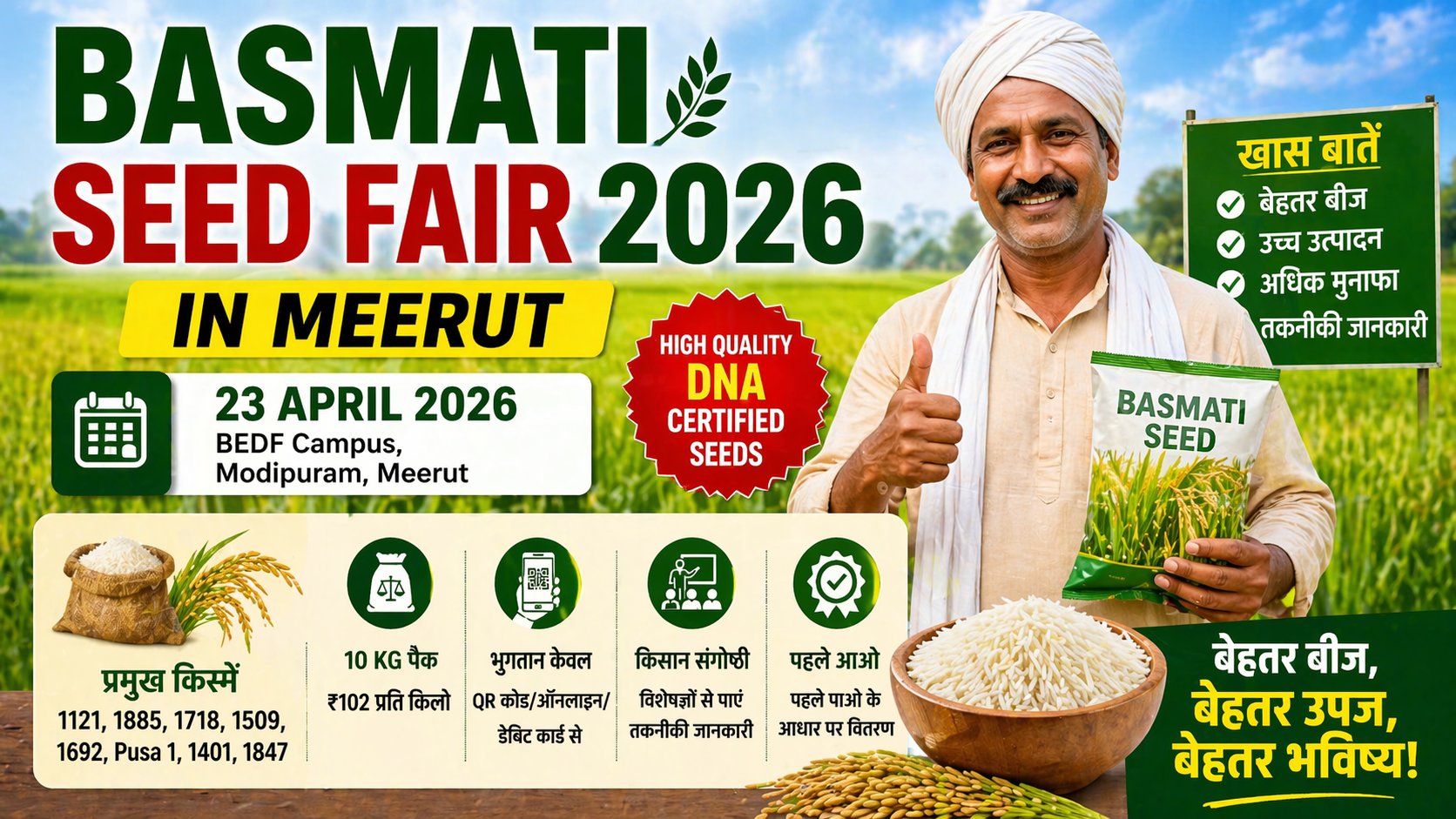
The Basmati Seed Fair 2026 is set to take place on April 23, 2026, at the Basmati Export Development Foundation (BEDF) campus in Modipuram, Meerut. Organized under APEDA (Agricultural and Processed Food Products Export Development Authority), this event aims to provide high-quality, certified Basmati seeds to farmers and promote advanced agricultural practices.

Basmati Seed Fair 2026
Farmers from states like Punjab, MP,  Haryana, Uttarakhand, Western Uttar Pradesh, Delhi, and Jammu are expected to participate in large numbers. The fair serves as a major platform for farmers to access improved seed varieties, gain technical knowledge, and connect with agricultural experts.


Basmati Seed Varieties Available at the Fair

At the Basmati Seed Fair 2026, farmers will get access to several improved and high-yielding Basmati rice varieties. These include:

  • Pusa Basmati 1121
  • Pusa Basmati 1885
  • Pusa Basmati 1718
  • Pusa Basmati 1509
  • Pusa Basmati 1692
  • Pusa Basmati 1
  • Pusa Basmati 1401
  • Pusa Basmati 1847

These varieties are known for their excellent aroma, grain quality, and high market demand, helping farmers achieve better productivity and higher profits.


Seed Price and Packaging Details
Basmati Seed Fair 2026

All seeds at the fair will be available in 10 kg packs, with a fixed price of ₹100 per kg. This uniform pricing ensures affordability and transparency for all farmers.

Seed distribution will follow a “first-come, first-served” basis, so early arrival is recommended for better availability.


Digital Payment System for Transparency

To promote transparency and ease of transactions, the fair will follow a cashless payment system. Farmers can make payments through:

  • QR Code
  • Online Transactions
  • Debit Card

This digital approach reduces the risk of cash handling and ensures a smooth purchasing process.


High-Quality DNA Certified Seeds

One of the major highlights of the fair is the availability of DNA-certified Basmati seeds. These seeds guarantee:

  • High purity and authenticity
  • Better germination rates
  • Improved crop yield
  • Superior grain quality

This ensures that farmers get reliable seeds that meet international quality standards.


Farmers Seminar and Technical Guidance

Along with seed distribution, a farmers’ seminar will also be आयोजित during the event. Agricultural experts will share valuable insights on:

  • Advanced Basmati cultivation techniques
  • Disease and pest management
  • Proper fertilizer usage
  • Modern farming practices

This knowledge will help farmers adopt scientific and efficient farming methods, leading to increased productivity.


Importance of Basmati Rice

Basmati rice is a premium long-grain aromatic rice variety grown in specific regions of the Indian subcontinent. It is highly valued for its distinct aroma, taste, and cooking quality.

In 2016, Basmati rice received Geographical Indication (GI) status, which protects its authenticity and enhances its global market value. It is widely used in the hospitality industry and international markets, making it a profitable crop for farmers.


Quality Monitoring with Basmati Net

To maintain quality and traceability, APEDA has developed a web-based system called Basmati.Net. This platform digitally tracks the entire supply chain—from production to export—ensuring:

  • Transparency
  • Quality assurance
  • Authenticity of Basmati rice

This system strengthens the credibility of Indian Basmati in global markets.


Conclusion

The Basmati Seed Fair 2026 in Meerut is a golden opportunity for farmers to access certified seeds, modern farming knowledge, and expert guidance under one roof. With high-quality seeds, digital payment systems, and technical seminars, the event aims to boost farm productivity, income, and sustainable agriculture practices.

Farmers planning to attend should arrive early to take full advantage of this important agricultural event. in Meerut: Date, Varieties, Price & Key Highlights for Farmers

The Basmati Seed Fair 2026 is set to take place on April 23, 2026, at the Basmati Export Development Foundation (BEDF) campus in Modipuram, Meerut. Organized under APEDA (Agricultural and Processed Food Products Export Development Authority), this event aims to provide high-quality, certified Basmati seeds to farmers and promote advanced agricultural practices.

Farmers from states like Punjab, Haryana, Uttarakhand, Western Uttar Pradesh, Delhi, and Jammu are expected to participate in large numbers. The fair serves as a major platform for farmers to access improved seed varieties, gain technical knowledge, and connect with agricultural experts.


Basmati Seed Varieties Available at the Fair

At the Basmati Seed Mela 2026, farmers will get access to several improved and high-yielding Basmati rice varieties. These include:

  • Pusa Basmati 1121
  • Pusa Basmati 1885
  • Pusa Basmati 1718
  • Pusa Basmati 1509
  • Pusa Basmati 1692
  • Pusa Basmati 1
  • Pusa Basmati 1401
  • Pusa Basmati 1847

These varieties are known for their excellent aroma, grain quality, and high market demand, helping farmers achieve better productivity and higher profits.


Seed Price and Packaging Details

All seeds at the fair will be available in 10 kg packs, with a fixed price of ₹100 per kg. This uniform pricing ensures affordability and transparency for all farmers.

Seed distribution will follow a “first-come, first-served” basis, so early arrival is recommended for better availability.


Digital Payment System for Transparency

To promote transparency and ease of transactions, the fair will follow a cashless payment system. Farmers can make payments through:

  • QR Code
  • Online Transactions
  • Debit Card

This digital approach reduces the risk of cash handling and ensures a smooth purchasing process.


High-Quality DNA Certified Seeds

One of the major highlights of the fair is the availability of DNA-certified Basmati seeds. These seeds guarantee:

  • High purity and authenticity
  • Better germination rates
  • Improved crop yield
  • Superior grain quality

This ensures that farmers get reliable seeds that meet international quality standards.


Farmers Seminar and Technical Guidance

Along with seed distribution, a farmers’ seminar will also be आयोजित during the event. Agricultural experts will share valuable insights on:

  • Advanced Basmati cultivation techniques
  • Disease and pest management
  • Proper fertilizer usage
  • Modern farming practices

This knowledge will help farmers adopt scientific and efficient farming methods, leading to increased productivity.


Importance of Basmati Rice

Basmati rice is a premium long-grain aromatic rice variety grown in specific regions of the Indian subcontinent. It is highly valued for its distinct aroma, taste, and cooking quality.

In 2016, Basmati rice received Geographical Indication (GI) status, which protects its authenticity and enhances its global market value. It is widely used in the hospitality industry and international markets, making it a profitable crop for farmers.


Quality Monitoring with Basmati Net

To maintain quality and traceability, APEDA has developed a web-based system called Basmati.Net. This platform digitally tracks the entire supply chain—from production to export—ensuring:

  • Transparency
  • Quality assurance
  • Authenticity of Basmati rice

This system strengthens the credibility of Indian Basmati in global markets.


Conclusion

Basmati Seed Fair 2026 in Meerut is a golden opportunity for farmers to access certified seeds, modern farming knowledge, and expert guidance under one roof. With high-quality seeds, digital payment systems, and technical seminars, the event aims to boost farm productivity, income, and sustainable agriculture practices.

Farmers planning to attend should arrive early to take full advantage of this important agricultural event.

MSP On Wheat 2026

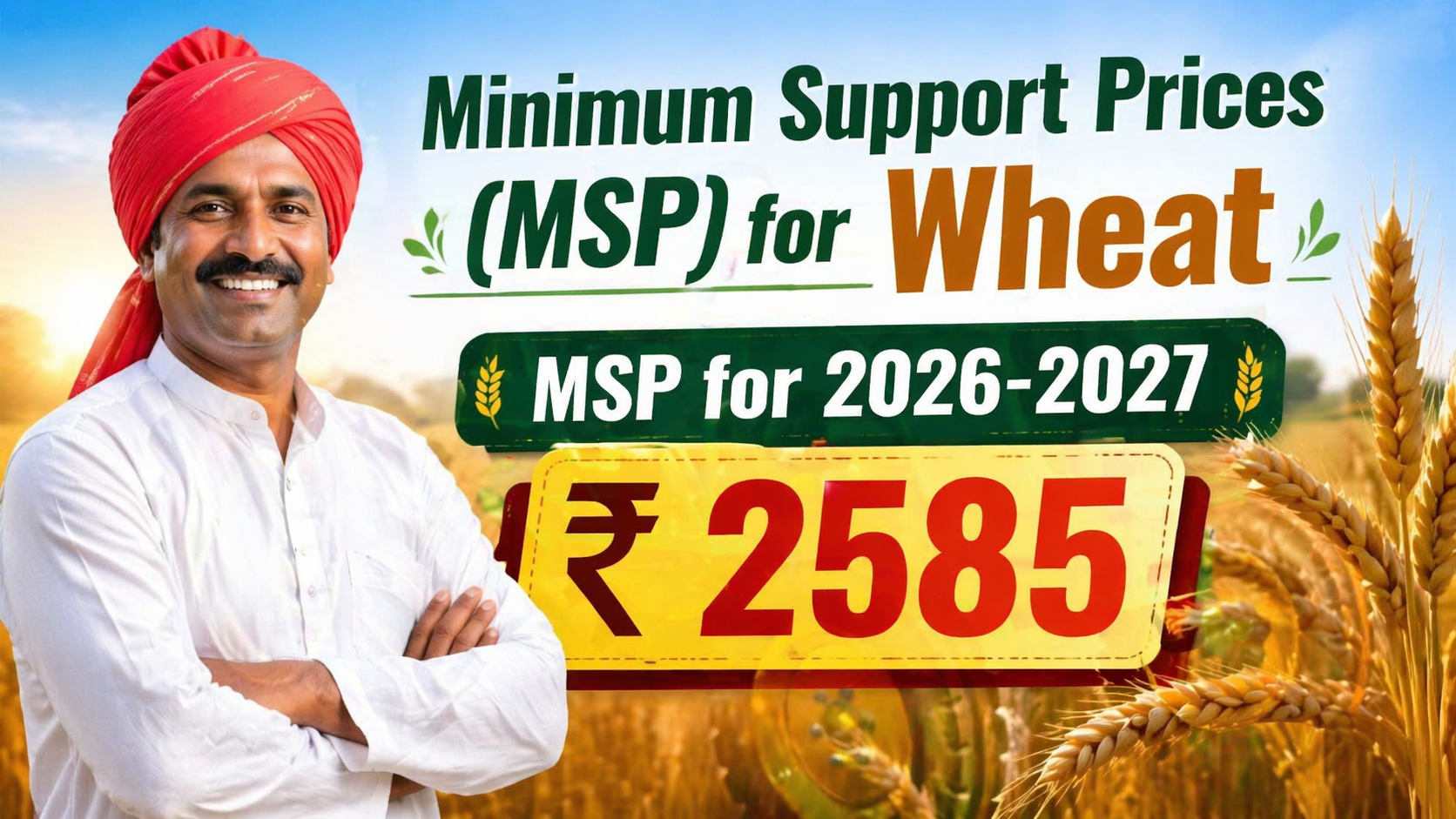
Minimum support price MSP On Wheat 2026 = ₹ 2585 /- per quintal.

Wheat Procurement 2026-27: Over 57 Lakh Quintals Purchased, Farmers Get ₹2585/- per quintal MSP

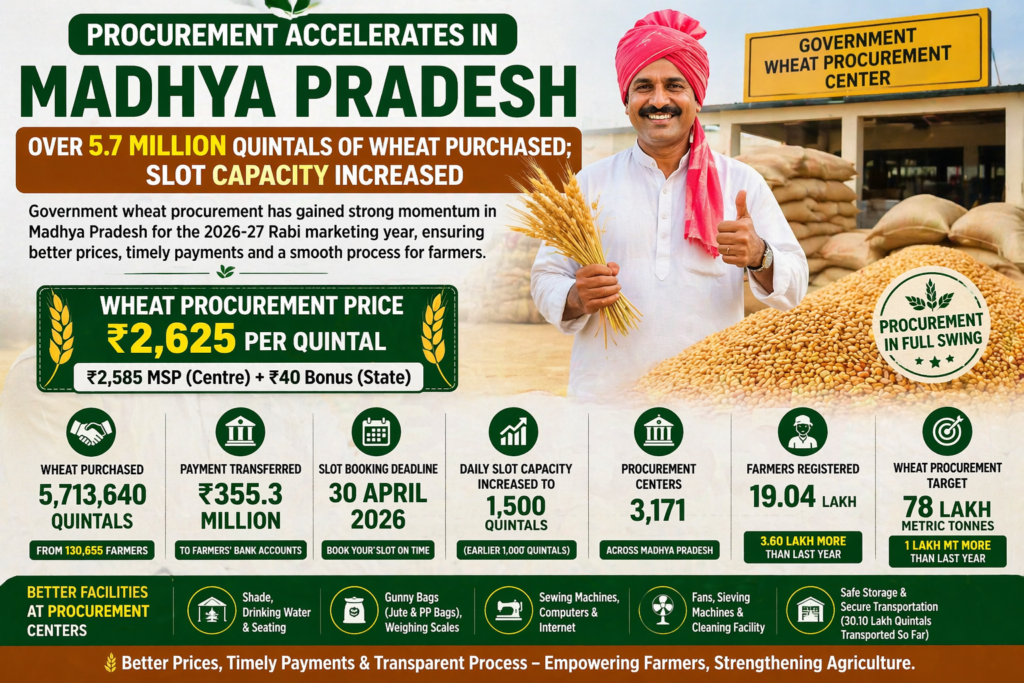
Wheat procurement in Madhya Pradesh for the 2026-27 Rabi marketing season has gained strong momentum, with the government taking major steps to ensure better prices, smooth procurement, and timely payments for farmers. The last date for slot booking is April 30, 2026, allowing farmers to sell their produce at government centers without delay.

According to officials, more than 57.13 lakh quintals of wheat have been procured from over 1.30 lakh farmers, reflecting a growing trust in the government procurement system. To support farmers financially, around ₹355.3 million has been directly transferred to their bank accounts, ensuring fast and transparent payments.

Slot Booking Limit Increased

To reduce congestion at procurement centers, the government has increased the daily slot booking capacity from 1,000 to 1,500 quintals. A total of 3,171 procurement centers are operational across the state, helping farmers sell their crops more efficiently.

MSP Increased to ₹2,625 Per Quintal (MP)

Farmers are receiving a total of ₹2,625 per quintal in madhya pradesh, which includes the Central MSP of ₹2,585 plus a ₹40 state bonus. This higher price is significantly benefiting farmers and improving their income.

Record Farmer Registration

This year, 19.04 lakh farmers have registered, marking an increase of 3.60 lakh farmers compared to last year. The state has set a procurement target of 78 lakh metric tonnes, indicating strong growth in agricultural participation.

Better Facilities at Procurement Centers

The government has improved infrastructure at centers by providing shade, drinking water, weighing machines, storage bags, internet access, and cleaning equipment. Over 30.10 lakh quintals of wheat have already been safely transported, ensuring better storage and logistics.

Translate »