
Automobile Lubricant Prices Surge 15–20% in India Amid Middle East Crisis
Lubricant Price Hike in India 2026
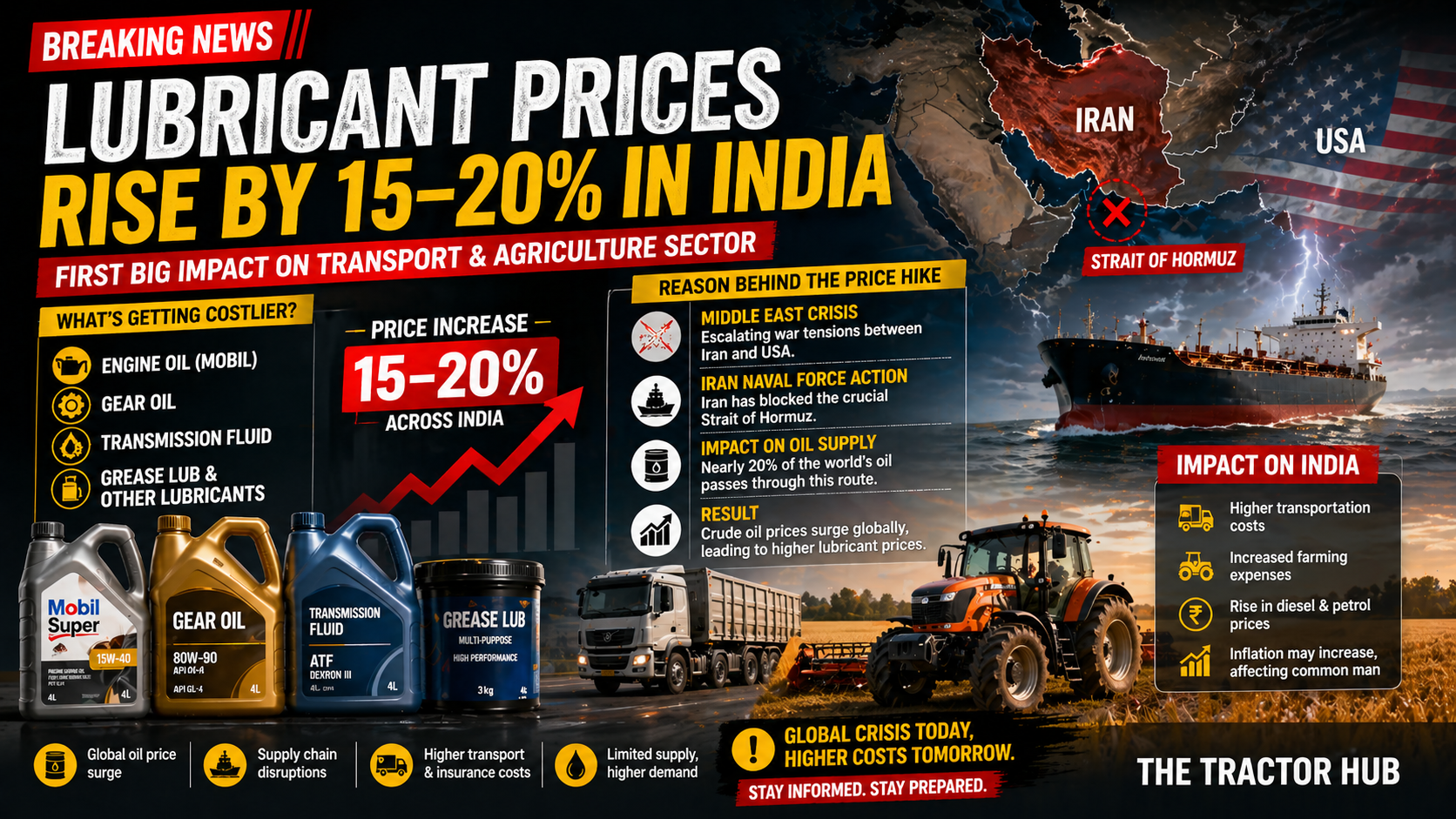
India is witnessing a sharp 15–20% increase in the prices of automobile lubricants, including engine oil (Mobil), gear oil, transmission fluid, and grease lubricants. This sudden price hike is becoming a major concern for both the transport sector and agricultural vehicle owners, as it directly impacts operating costs.
Impact on Transport and Agriculture Sector
The increase in lubricant prices is expected to be the first major cost burden in the current crisis. Truck operators, tractor owners, and farmers are already feeling the pressure as maintenance costs for vehicles are rising. Since lubricants are essential for engine performance and machine life, the price rise is unavoidable, leading to higher expenses in logistics and farming activities.
Experts believe that this will eventually lead to increased transportation charges, which may further impact the prices of goods, agricultural produce, and daily commodities in India.
Reason Behind the Price Hike: Middle East War & Strait of Hormuz Crisis
The primary reason behind this price surge is the ongoing geopolitical tension between Iran and the United States in the Middle East. The situation has escalated into a major global concern after Iran’s naval forces reportedly disrupted and restricted movement in the Strait of Hormuz, one of the world’s most critical oil supply routes.
The Strait of Hormuz carries nearly 20% of the world’s oil supply, making it a key lifeline for global energy markets.
Due to the conflict, oil supply has been severely affected, leading to a sharp increase in crude oil prices globally.
In fact, reports suggest that the disruption in this route has caused one of the biggest energy supply shocks in recent years, impacting countries heavily dependent on oil imports like India.
Why Lubricant Prices Are Increasing
Automobile lubricants such as engine oil, transmission oil, and grease are derived from crude oil. When crude oil prices rise, the cost of manufacturing these lubricants also increases.
Key factors driving the price rise include:
- Global crude oil price surge due to war
- Supply chain disruptions in shipping routes
- Higher transportation and insurance costs
- Increased demand and limited supply
As a result, lubricant companies have started revising prices, leading to a 15–20% increase across India.
Impact on India’s Economy
India imports a significant portion of its crude oil, and a large share of it passes through the Strait of Hormuz. Any disruption in this route creates inflationary pressure across multiple sectors, especially:
- Transport and logistics
- Agriculture (tractors, harvesters, pumps)
- Manufacturing and small industries
This situation may also lead to a rise in diesel and petrol prices in the coming weeks, further increasing operational costs.
What Lies Ahead?
If the Middle East conflict continues and the Strait of Hormuz remains disrupted, experts warn that:
- Lubricant prices may increase further
- Transportation costs will rise
- Inflation may increase in India
The Indian government may need to rely on alternative oil sources and strategic reserves to manage the crisis.
Conclusion
The 15–20% rise in automobile lubricant prices is a direct result of the global oil crisis triggered by the Middle East conflict. For India, this situation highlights the strong link between global geopolitics and domestic economy, especially in sectors like agriculture and transportation
The current rise in automobile lubricant prices in India is a clear example of how global geopolitical tensions can impact local economies. With a 15–20% hike already visible, farmers, transporters, and industries must prepare for increased operational costs.
The situation highlights the importance of stable global energy supply chains and the need for India to continue diversifying its energy sources to reduce dependency on volatile regions.