
Which Mobil is best for my bike

Which Mobil is best for my bike

Which engine oil is best for a bike—

mineral (conventional)
Fully synthetic
Semi-synthetic

This question arises in the mind of almost every rider. The job of engine oil is not just to reduce friction but also to keep the engine cool, clean, and prolong its life. For this reason, choosing the right oil becomes important. 

Let us understand these three types in simple terms.

Mineral or conventional oil is made by refining base oil. It is the most economical option and proves adequate for everyday normal riding.

However, its performance may be limited in high temperatures, high revs or prolonged hard driving. Due to its comparatively lower oxidation resistance and deposit control, it needs to be changed relatively frequently.

Fully synthetic oil is chemically engineered, making its molecules more uniform and stable. As a result, it provides better protection in both extreme heat and cold, flows faster during cold starts, maintains film strength at high revs, and generally contributes to better mileage and engine longevity. 

It is usually expensive, but in many cases can extend drain intervals, provided the manufacturer’s recommendations are followed.

Semi-synthetic oil is a blend of mineral and synthetic oils. Its cost and performance lie in the middle—better thermal stability and cleanliness than mineral oil, but not as high performing as full synthetic. For daily office commutes, moderate distances and normal riding, it is considered a balanced choice, especially if you do not want to spend entirely on full synthetic but desire better protection than mineral. So, which should you choose? 

First, check your bike’s owner manual—it clearly states the viscosity grade (such as 10W-30, 10W-40), API/ACEA and JASO (such as JASO MA/MA2)

specifications. Engine CC, your riding style (city traffic vs highway), weather/temperature, service intervals, and warranty conditions also matter. For general use, semi-synthetic is often sufficient.

full synthetic can be beneficial for performance riding, extreme temperatures, or long highway rides. Only go for unnecessarily expensive oils if needed and approved by the manufacturer. If in doubt, consult the brand’s customer care or an authorized service center—and yes, let us know which oil you use in your bike!
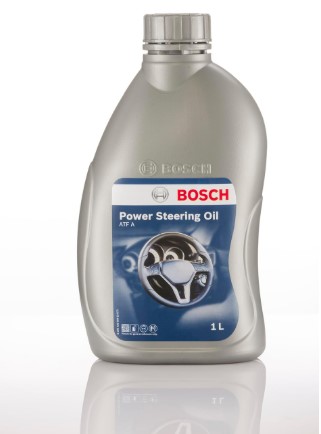
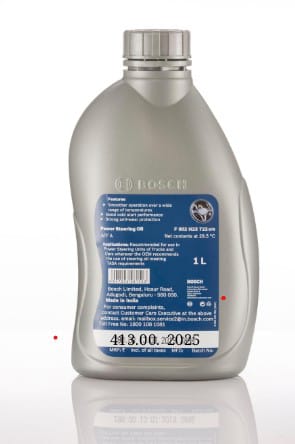
power steering oil bosh

power steering oil bosh

Part Number . F002 H23 722

Power steering oil ATF A

Unit Sale price 413.00 per number

Applications:- Recommended for use in power steering units of Tractor, truck and cars whenever the OEM recommends the use of steering oil meeting

Features

Smoother operation over a wide range of temperatures

Good cold start performance

Strong anti wear protection

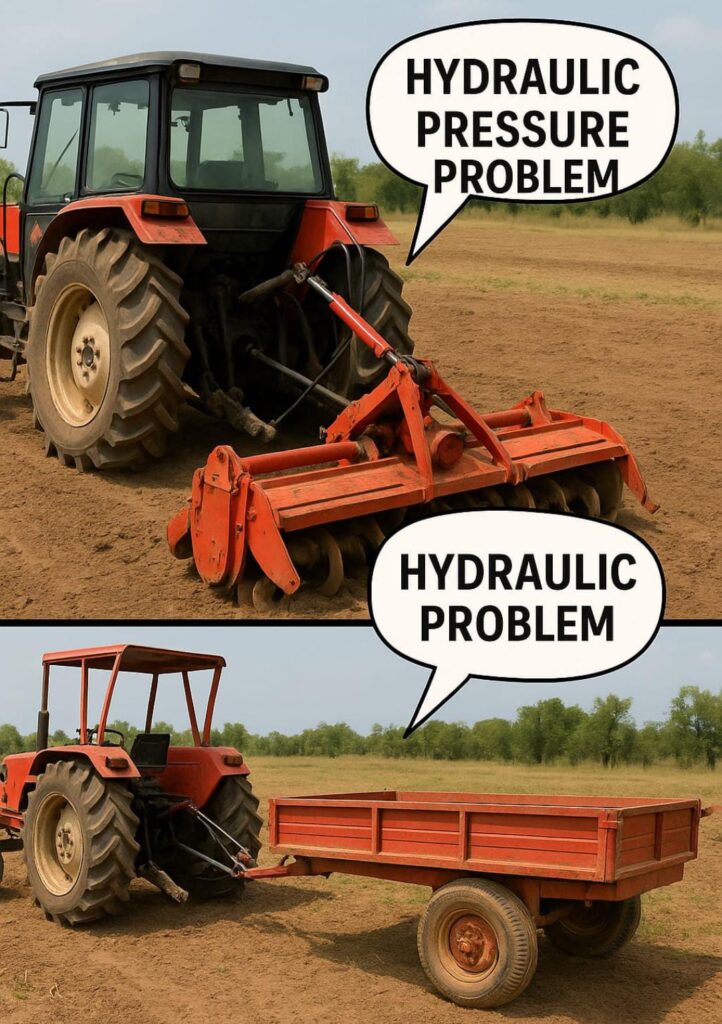
Tractor hydraulic problem and solution

Tractor hydraulic problem and solution

TRACTOR HYDRAULIC PROBLEM
There are many ways to deal with tractor hydraulic problems as the issue can range from oil leaks to faulty pumps, faulty filters, air leaks, overheating, and even sluggish running.
Slow or weak performance
If your tractor implements respond slowly to lift or perform, the system probably is not creating enough pressure.
Low fluid levels: The simplest reason for poor operation is low hydraulic fluid. Refer to the reservoir and top off with the fluid recommended by the manufacturer as necessary.
Clogged filters: A dirty or plugged hydraulic filter slows down fluid flow, causing the system to lag. Change the filter per your tractor’s service schedule.
worn hydraulic motor: The hydraulic pump is the system’s backbone. When it is worn, it will be unable to provide sufficient pressure and flow. It can be diagnosed by looking for low pressure, strange noises, and inefficiency.
Overheating
Heat may damage oil seals and run out the hydraulic fluid, causing premature component failure.
fluid level: Low fluid makes the system have to work harder and produce more heat.
Incorrect gear oil : Use of the wrong viscosity gear oil may compromise the system’s capacity for heat dissipation. Only use the fluid that the manufacturer recommends.
Excessive load: Driving under heavy load for a long time can tax the system too much and make it overheat.
Erratic or jerky movement
Irregular or stuttering hydraulic movement is frequently the result of air contaminated in the fluid.
Air leakage: Air may enter the system through loose fittings or leaks in suction side pump. Check all the hose and fittings for damage or loose clamps.
Fluid contamination
Dirty hydraulic fluid can do severe damage to your system by destroying seals, clogging filters, and wearing out components.
Water contamination: If your hydraulic fluid appears whiteness, it is water-contaminated, which can rust parts and deteriorate the fluid’s properties.
Dirt : Dirt particles can find their way into the system via external leaks, dirty couplers, or maintenance.
Leaks
Fluid leaks cause loss of pressure, decreased efficiency, and possible environmental risk.
Worn hoses and seals: Check all hoses and seals for cracks, damage, or wear and tear.
Loose fittings: Inspect all fittings and connections to make sure they are securely tightened.
Damaged couplers: Quick-connect couplers may leak because of damaged internal O-rings.
Before you start

My tractor is not racing what should I do

My tractor is not racing what should I do

  • Reason behind the tractor is  not racing, (power drop)
  • Fuel Supply. Sometimes various types of garbage get stuck in the tractor tank. The fuel supply is not reaching the pump properly. Either the pipe is blocked, the mesh is blocked, or the Diesel filter is stuck by the garbage. All these factors cause obstruction in the fuel line.
  • Fuel Pump. Sometimes the race setting in the fuel pump gets messed up. Because of this, the tractor has difficulty in acceleration. and also tractor speed and power
  • Clutch Assembly Problems. If the tractor’s acceleration is full or fast. Then the clutch and pressure plate can also be a reason. Because the clutch and pressure plate wear out over time. It is necessary to change these. If the clutch plate is old and worn out. Then it does not transfer full power from the engine to the gearbox. The tractor cannot run fast and with power. And this is why the engine also overheats.
  •  Adjustment of clutch pedal. Make sure the clutch pedal is fully released. A loose clutch or pedal clearance problem can cause a decrease in power transfer.
  • Tyre condition is also a reason of power drop.
  • Air Filter: A clogged air filter can also hamper engine performance.
  • SOLUTION.
  • Clean the tractor tank and fuel lines
  • change diesel filter
  • Get the pump settings adjusted by a mechanic.
  • Change the clogged air filter with new one.
  • And if all this doesn’t work out
  • Then go to a mechanic and get the clutch and pressure plate checked. If it is damaged, replace it with a new one.
  • Hope your tractor will be fine. and work as new one.

Escort Powertrac Half Axle Oilseal

Escort Powertrac Half Axle Oilseal

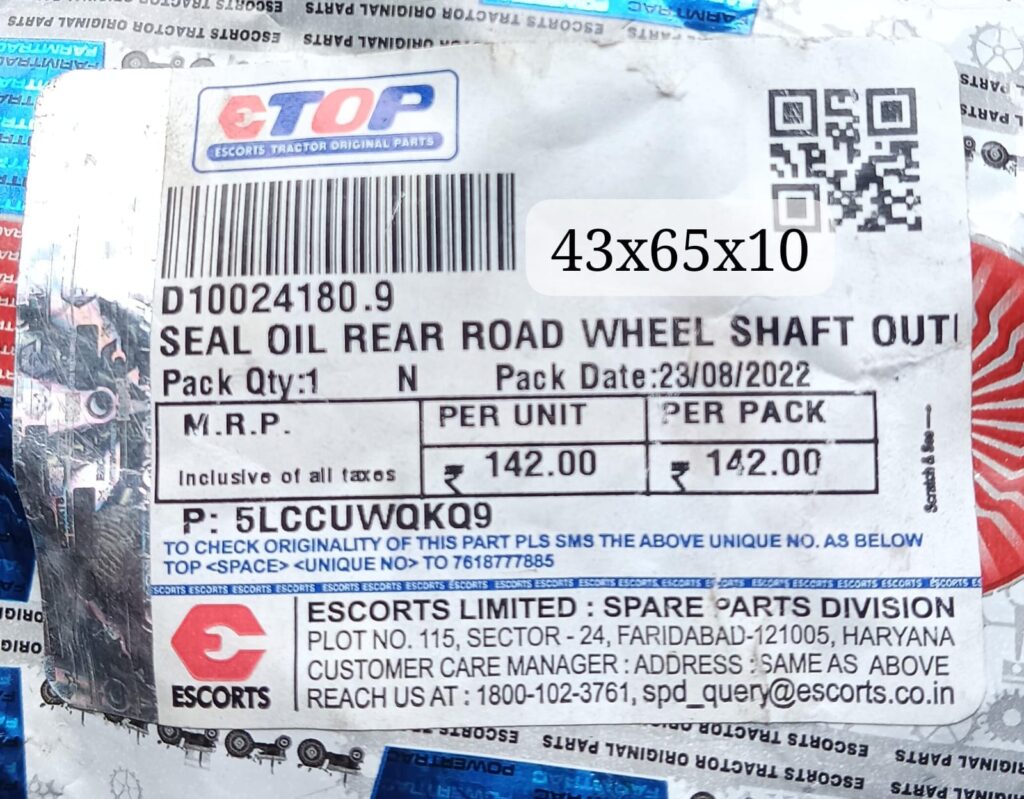
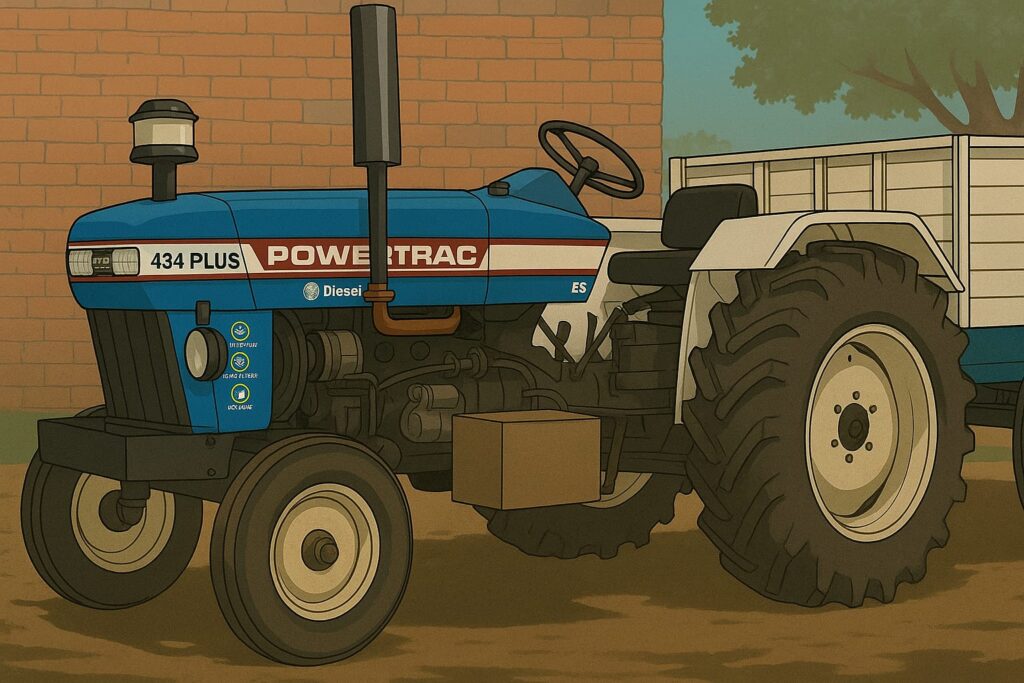
powertrac half axle oilseal

Powertrac Half axle Oilseal

Part Number. D10024180.9

Oilseal Number:- 43x65x10

Unit Sale Price Rs. 142.00 Per Number 

Used before brake assembly for block main housing oil into brake shoe disk

powertrac half axle oilseal

Powertrac Half axle Oilseal

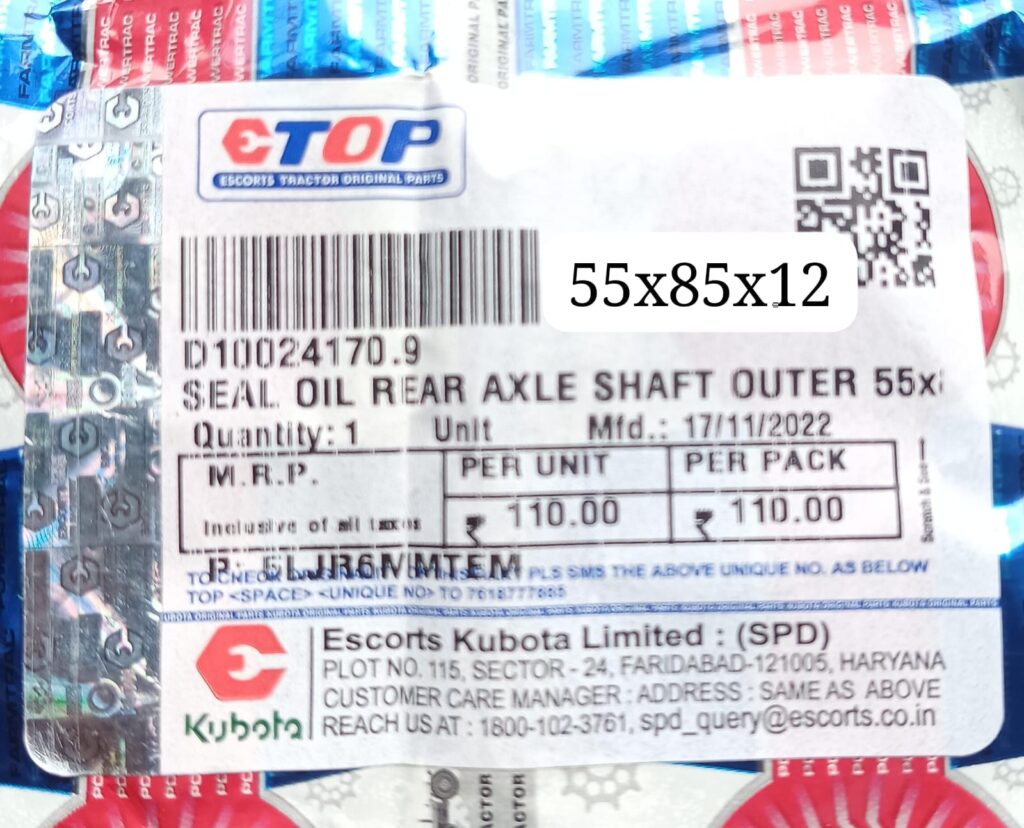
Part Number. D10024170.9

Oilseal Number:- 55x85x12

Unit Sale Price Rs. 110.00 Per Number 

Used After brake assembly for block Half  housing oil into brake shoe disk

Powertrac Half axle Oilseal

Part Number. – – – – – – – – – –

Oilseal Number:- 80x110x12/17

Unit Sale Price Rs. 120.00 Per Number 

Used After brake assembly for block Half housing oil into brake shoe disk

Powertrac Half Axle Bearing

Bearing Number :- 32213  +  55x85x12 seal

Bearing Number :- 30210  + 80x110x12/17 seal

Bearing Number :- 30307 can replace with 6307 

Bearing Number :- 30208 can replace with 6208

Tips.

Use Branded Bearing Instead of Local Bearing 

30307 or 30208 these are taper roller bearing

can be used 6307 or 6208 ball bearing 

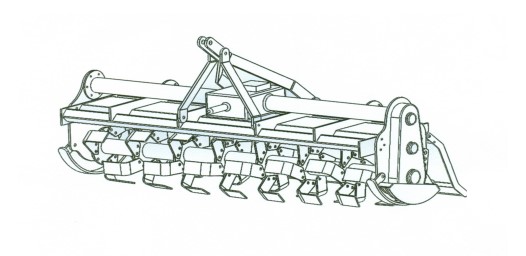
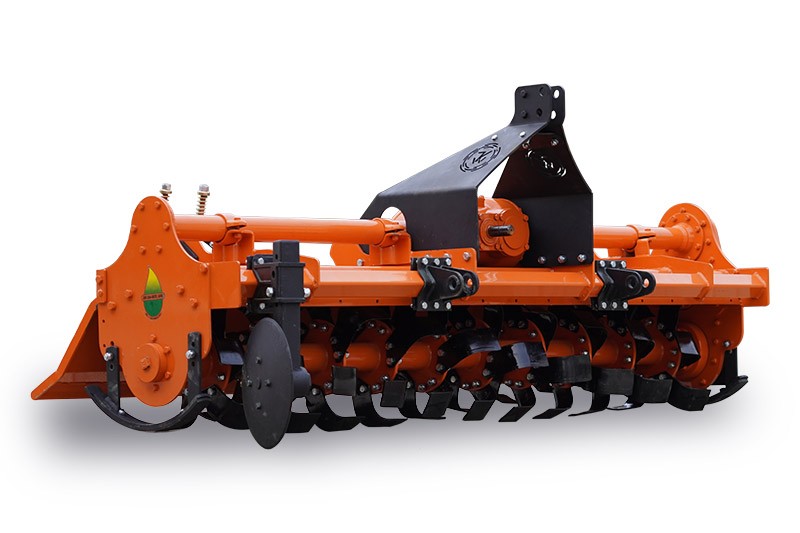
How to maintain Rotavator

How to maintain Rotavator

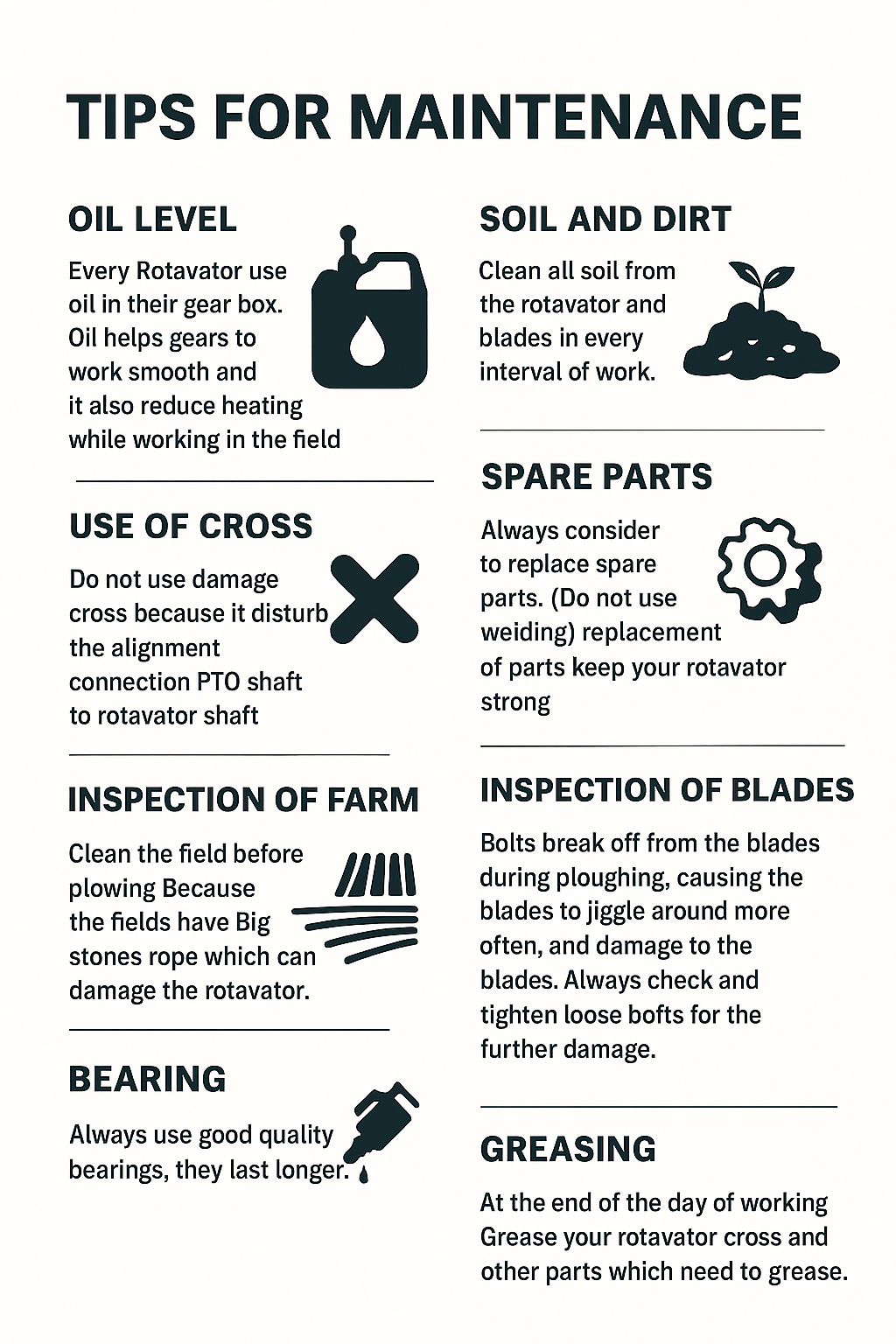
TIPS FOR MAINTENANCE

Oil level: – Every Rotavator use oil in their shaft gear box and Rotary gear box. Oil helps gears to work smooth and it also reduce heating while working in the field 

So when working in the field check oil level every after 2or3 days. To avoid extra expenses or waste of time during heavy work load.

Soil and dirt :- while working in the field heavy soil stick under the rotary  it reduce the rotavator speed and harm the body    So clean all soil from the rotavator and blades  in every interval of work.
Use Of Cross :- do not use damage cross because it disturb the alignment connection PTO shaft to rotavator shaft 
Spare Parts :- Always consider to replace spare parts not use welding replacement of parts keep your rotavator strong
Inspection of farm  :- Clean the field before plowing Because the fields have Big stones rope which can damage the rotavator. The rope clings to the blade and damages the oil seal
Inspection of blades:

Bolts break off from the blades during ploughing, causing the blades to jiggle around more often. and damage to the blades Always check and tighten loose bolts for the further damage.

Bearing :- Always use good quality bearings, they last longer.
Greasing:- At the end of the day of working. Grease your rotavator cross and other parts which need to grease. the habit of greasing protect parts from corrosion
TIPS FOR MAINTENANCE ROTAVATOR

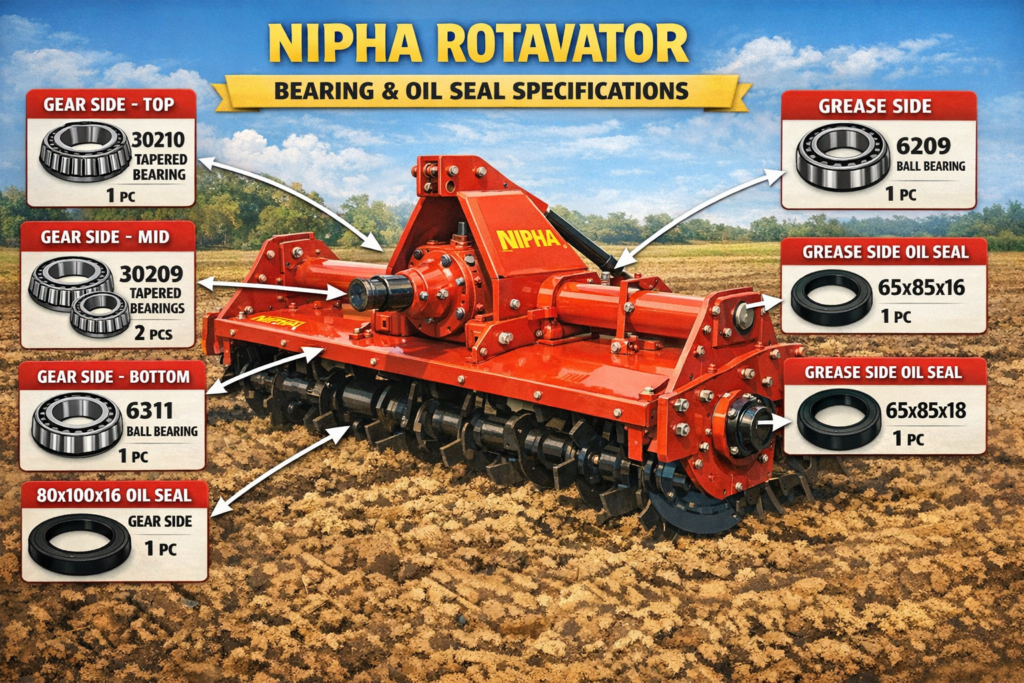
Nipha Rotavator Bearing and Oilseal

Nipha Rotavator Bearing and Oilseal

Grease side :-  – – – – – –   6209

Gear Box side bottom- – – –6311

Gear Box side middle – – – 30209

Gear Box side Top – – –   – 30210

Oil seal  Num.. Grease side – 65x85x16   (6209)

Oil seal Num. Gear box side  80x100x16  (6311)

Shaft Oil seal – – – – – – – – – – – 

Bearing consider to buy branded bearing like.. skf deluxe texspin etc..

TIPS FOR MAINTENANCE

Checking oil level: – Every Rotavator use oil in their shaft gear box and Rotary gear box. Oil helps gears to work smooth and it also reduce heating while working in the field 

So when working in the field check oil level every after 2or3 days. To avoid extra expenses or waste of time during heavy work load.

Cleaning soil and dirt :- while working in the field heavy soil stick under the rotary  it reduce the rotavator speed and harm the body      So clean all soil from the rotavator in every interval of work.

Use Of Cross :- do not use damage cross because it disturb the alignment connection PTO shaft to rotavator shaft 

Spare Parts :- Always consider to replace spare parts not use welding replacement of parts keep your rotavator strong

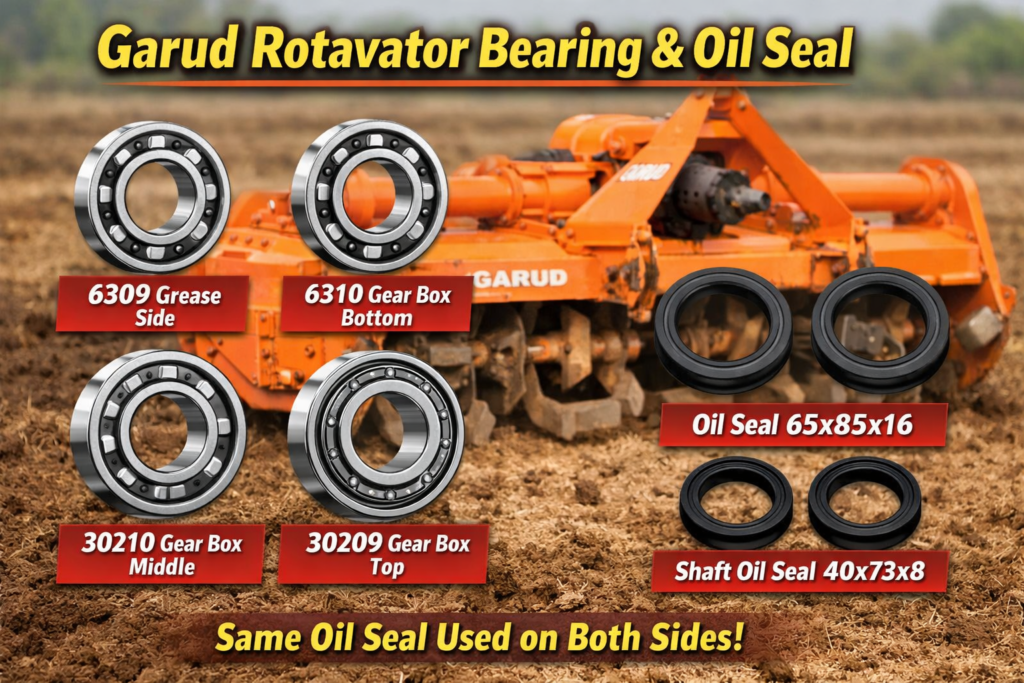
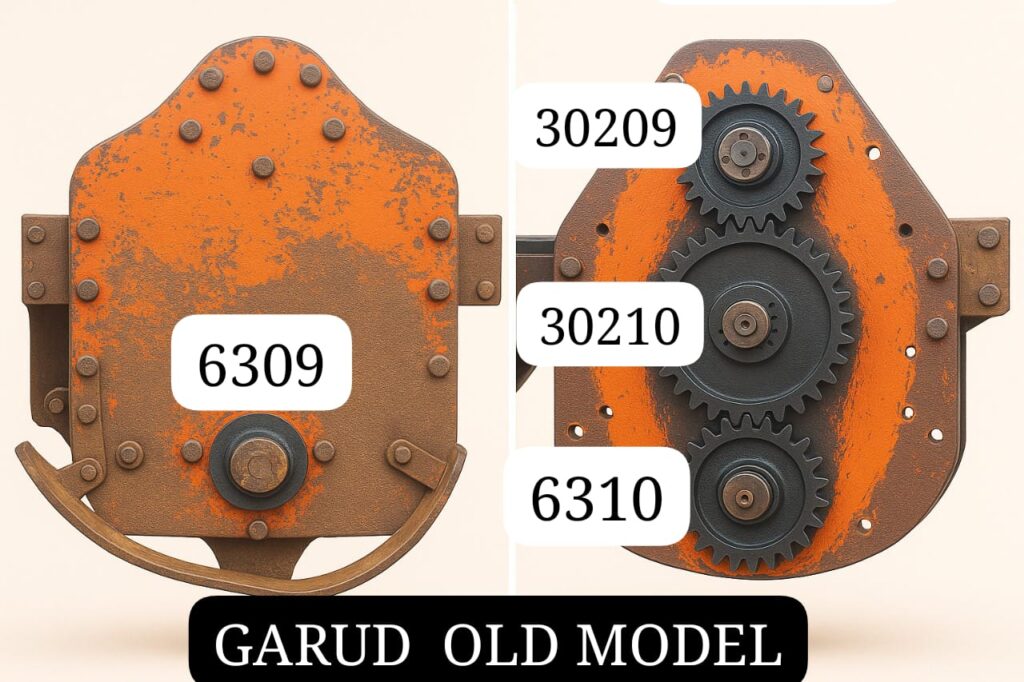
Garud Rotavator Bearing and oil seal

Garud Rotavator Bearing and oil seal

Grease side :-  – – – – – –   6309

Gear Box side bottom- – – –6310

Gear Box side middle – – – 30210

Gear Box side Top – – –   – 30209

Oil seal Number- – – – – – 65x85x16

Shaft Oil seal – – – – – – –40x73x8

Note..  same oil seal used in  both side 

Tips to purchase 

In Oilseal consider DS model (Double lip) oilseal

In Bearing consider to buy branded bearing like.. skf deluxe texspin etc..

Garud rotavator oilseal number and price !

Oilseal  

65x85x16

65x85x18

65x85x19 

MRP band  Rs-100 to 150 

for normal and DS (double sleeve) both 

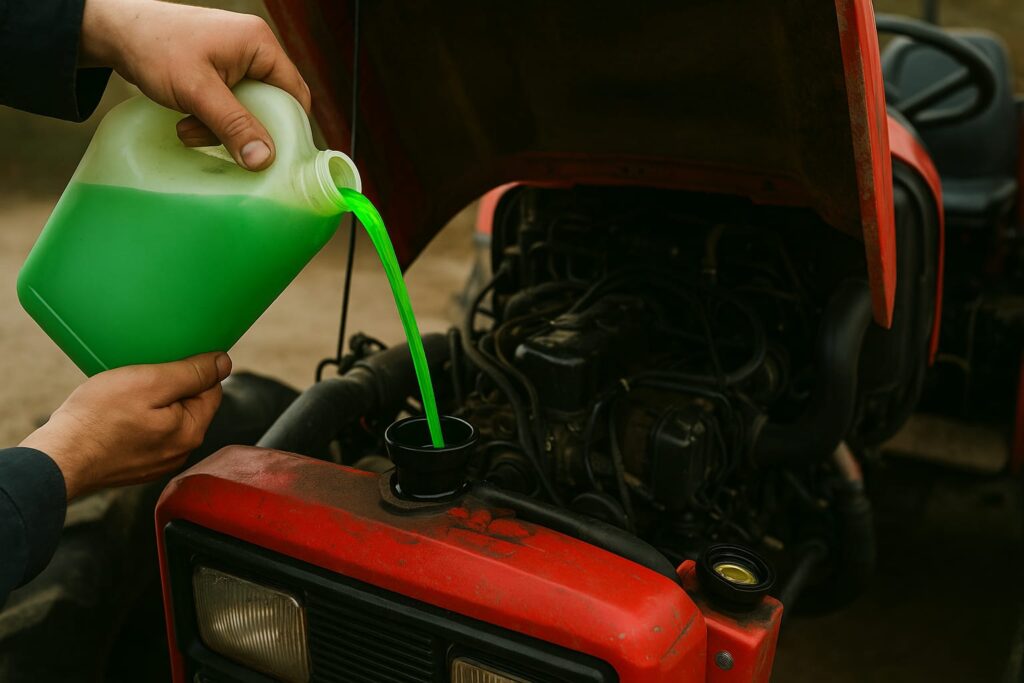
Why We Use Coolant in Tractor

Why We Use Coolant in Tractor

Coolant in a tractor is used to regulate the engine’s temperature

preventing overheating and ensuring optimal performance. It helps dissipate heat generated during engine operation, protects engine components from thermal damage, and maintains efficient functioning under heavy loads or high temperatures. Proper cooling also extends the engine’s lifespan and improves fuel efficiency.

Water vs. Coolant

Feature Water Coolant
Purpose Primarily for cooling For cooling and engine protection
Freezing Point Freezes at 0°C Contains antifreeze, prevents freezing
Boiling Point Boils at 100°C Higher boiling point, prevents overheating
Corrosion Protection No Contains additives to prevent rust and corrosion
Lubrication No Yes, lubricates water pump and parts
Color/Additives Usually clear, no additives Often colored, contains corrosion inhibitors


Water vs. Coolant: Understanding the Differences and Features of Coolant

When it comes to maintaining the optimal temperature of engines and machinery, choosing the right fluid is crucial. Two common options are water and coolant. While both serve the purpose of heat transfer, they have distinct properties and applications.

Water: The Basic Cooling Medium

Advantages

  • High Thermal Conductivity: Water is excellent at absorbing and transferring heat.

  • Availability and Cost: It is inexpensive and readily available.

  • Effective in Short-Term Use: Suitable for temporary cooling needs.

Disadvantages

  • Corrosion: Water can cause rust and corrosion in metal parts.

  • Freezing Point: It freezes at 0°C, which can damage engines in cold climates.

  • Boiling Point: Boils at 100°C under standard pressure, limiting its effectiveness at high temperatures.

  • Scale and Mineral Deposits: Can lead to mineral buildup, reducing efficiency.

Coolant: The Specialized Fluid

What is Coolant?

Coolant, often called antifreeze, is a specially formulated liquid designed to regulate engine temperature and prevent damage. It is typically a mixture of water and chemical additives.

Features of Coolant

  • Antifreeze Properties: Prevents freezing in cold weather.

  • Boiling Point Elevation: Raises the boiling point, allowing the engine to operate at higher temperatures without boiling over.

  • Corrosion Inhibition: Contains additives that protect metal parts from rust and corrosion.

  • Lubrication: Provides lubrication to water pump and other moving parts.

  • Color and Additives: Available in various colors (green, orange, pink) for identification and contain dyes and inhibitors.

Types of Coolant

  • Inorganic Acid Technology (IAT): Traditional coolants with silicates and phosphates.

  • Organic Acid Technology (OAT): Longer-lasting, with organic acids.

  • Hybrid Organic Acid Technology (HOAT): Combines features of IAT and OA

Translate »