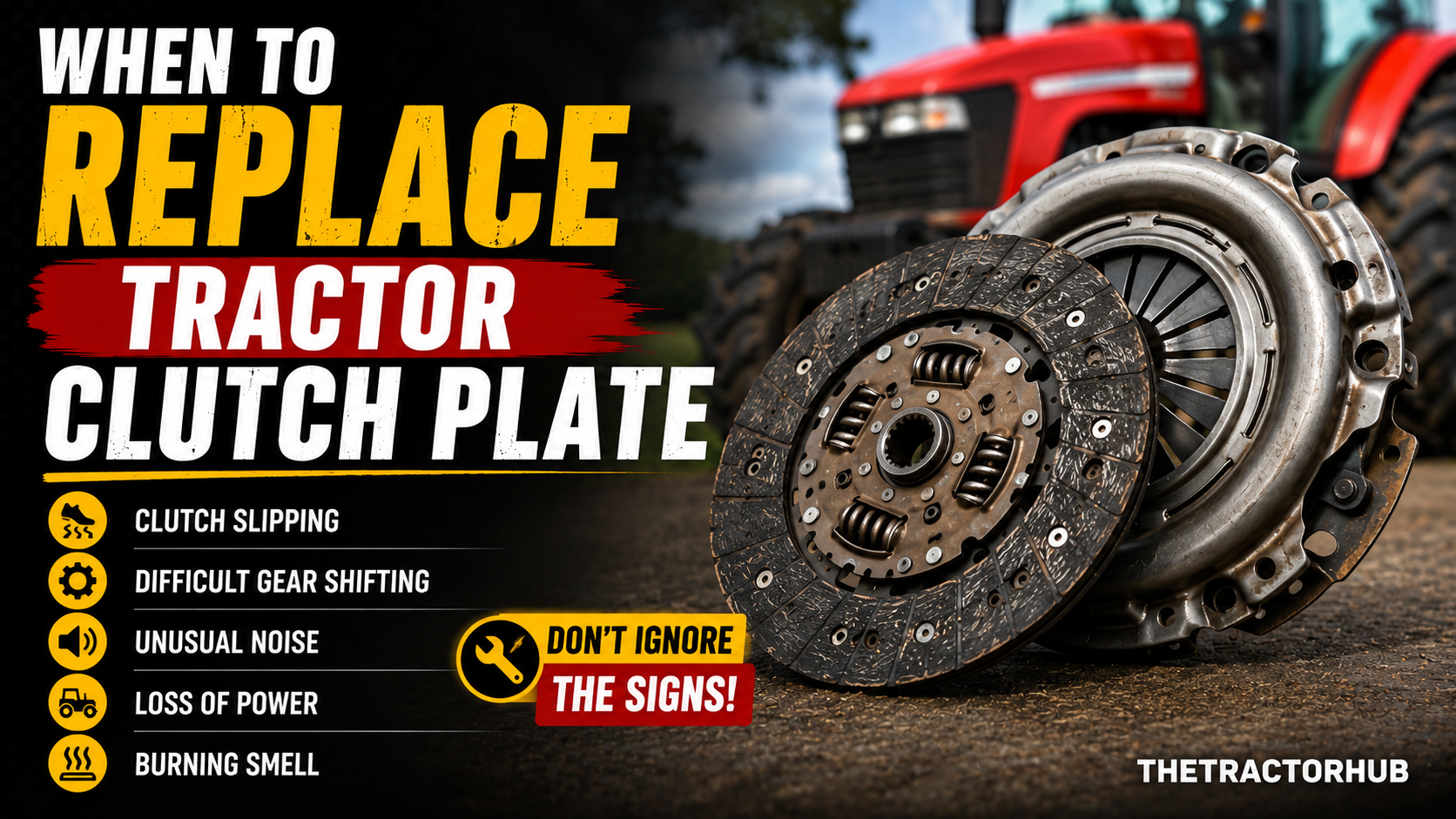
The clutch is one of the hardest working components in a tractor. It engages and disengages the engine power hundreds of times every working day. Over time, the clutch plate wears out and needs replacement. Knowing the signs of a worn clutch plate and replacing it at the right time prevents more serious and expensive transmission damage.
When to Replace Tractor Clutch Plate
How the Tractor Clutch Works
When you press the clutch pedal, it disengages the clutch plate from the engine flywheel, disconnecting engine power from the gearbox. When you release the pedal, the clutch plate engages again, transferring power smoothly from the engine to the wheels.
The clutch plate has friction material on both sides (similar to brake pads). This friction material slowly wears down with every engagement and disengagement.
How Long Does a Tractor Clutch Plate Last?
The life of a clutch plate depends heavily on how the tractor is used:
| Usage Pattern | Expected Clutch Life |
|————–|———————|
| Normal field work, proper technique | 2000-3000 hours |
| Heavy duty work, hills, overloading | 1000-1500 hours |
| Improper technique (riding the clutch) | 500-1000 hours |
| PTO intensive work (rotavator, harvester) | 1500-2000 hours |
Signs That Your Clutch Plate Needs Replacement
Sign 1 — Clutch Slipping
This is the most obvious sign. The engine revs increase when you accelerate but the tractor speed does not increase proportionally. The tractor feels like it has lost power even though the engine is running fine. This is most noticeable when climbing a slope or pulling heavy implements.
Sign 2 — Burning Smell
A burning smell — similar to burning rubber — especially when starting on a slope or engaging heavy implements, indicates the clutch plate is slipping and generating heat from friction.
Sign 3 — Clutch Pedal is Too High or Too Low
If the clutch fully engages at the very top of the pedal travel (barely pressing), the plate is worn. If the pedal goes almost to the floor before engaging, the linkage needs adjustment. Always adjust clutch pedal free play first before concluding the plate is worn.
Sign 4 — Difficulty Changing Gears
If gears are difficult to engage or the gearbox grinds when changing gears, the clutch may not be fully disengaging. This could be an adjustment issue or a worn pressure plate.
Sign 5 — Chattering or Shuddering
A vibration or chattering when the clutch engages indicates oil contamination of the clutch plate (oil on the friction surface) or a warped pressure plate.
Sign 6 — Clutch Pedal Feels Different
If the clutch pedal suddenly feels lighter or heavier than usual, or if the engagement point has changed significantly, have the clutch inspected.
Sign 7 — Engine heating and low Power output
When tractor operating any kind of work and it getting over heating and low power supply or low race.
Clutch Pedal Adjustment — Do This First
Before replacing the clutch plate, always check and adjust the clutch pedal free play. Incorrect free play is the cause of many apparent clutch problems.
-Free play is the distance the pedal moves before you feel resistance. For most Indian tractors, the correct free play is 25 to 40 mm (1 to 1.5 inches)*.
– Too much free play: Clutch does not fully disengage — difficulty in gear changing
– Too little free play: Clutch slips because it never fully engages — plate wears out faster
Adjusting free play is a simple job that takes 5 minutes — check your owner’s manual for the specific adjustment procedure for your tractor model.
What to Replace When Doing Clutch Work
When you open the clutch for replacement, always replace:
Clutch plate (friction disc)
Pressure plate (if worn or heat damaged)
Release bearing (throw-out bearing)
Never replace just the clutch plate and leave old worn bearings — they will fail shortly after and require doing the entire job again.
Clutch Life Extension Tips
– Avoid resting your foot on the clutch pedal while driving
– Never slip the clutch excessively when starting on a slope — use handbrake instead
– Engage the clutch smoothly — avoid sudden jerky engagement
– Keep clutch pedal free play correctly adjusted
– Avoid overloading the tractor
Conclusion
A worn clutch plate is a normal maintenance item that every tractor will need eventually. The key is recognising the signs early and replacing it before it causes damage to the flywheel or pressure plate. Always use quality original clutch plates — the friction material quality directly determines how long it lasts and how smoothly it operates. At *TheTractorHub.in*, we provide clutch plate information and part numbers for all major Indian tractor brands.